 (02) 9726 4491
Top Physiotherapist-Recommended Joint Pain Relief Methods

Clinically reviewed by Matthew Calabrese, Physiotherapist · Australian Health Practitioner Regulation Agency (AHPRA). This article is general information, not a substitute for an individual assessment.
Top Physiotherapist-Recommended Joint Pain Relief Methods
Joint pain is a common ailment that can profoundly impact an individual's quality of life, restricting movement and diminishing the ability to perform daily activities.
Physiotherapists, as experts in movement and function, are well-positioned to provide evidence-based recommendations for the alleviation of joint discomfort.
Their approach encompasses a comprehensive assessment of joint mobility to inform the development of personalised exercise programs tailored to each patient's needs. Manual therapy techniques, including massage and mobilisation, also enhance joint function and reduce pain.
Incorporation of pain management modalities such as heat, cold, and electrical stimulation, along with strengthening and stability training, can further assist in managing symptoms and improving joint health.
This synthesis of interventions aims to facilitate optimal pain relief and restore functional independence.
Assessing Joint Mobility
In the context of joint pain relief, accurately assessing joint mobility is a critical initial step physiotherapists undertake to tailor effective treatment plans.
This process, known as mobility evaluation, involves meticulously examining the affected joint's range of motion, stability, and pain response during movement.
By understanding the nuances of joint lubrication and its impact on mobility, physiotherapists can identify the underlying causes of joint pain.
This evidence-based approach ensures that interventions are client-centred, addressing specific limitations and promoting optimal joint function.
Through precise measurement and observation, physiotherapists can develop a targeted strategy that enhances joint lubrication, mitigates discomfort, and facilitates a return to daily activities with improved ease and less pain.
Personalised Exercise Programs
A personalised exercise program plays a pivotal role in the continuum of joint pain relief interventions. Grounded in evidence-based practice, these tailored programs are developed after a comprehensive movement analysis, ensuring that each exercise addresses the unique needs and limitations of the individual. By focusing on the client's specific impairments, a personalised approach not only aids in pain management but also significantly contributes to injury prevention, enhancing overall function and quality of life.
| Phase | Focus Area | Expected Outcome |
|-------|------------|------------------|
| Initial | Pain Management | Reduced discomfort |
| Mid-Term | Strength Building | Enhanced joint support |
| Ongoing | Flexibility & Mobility | Improved range of motion |
| Long-Term | Functional Integration | Sustained pain relief and injury prevention |
Each phase builds upon the previous, creating a comprehensive and adaptive strategy for joint health.
Manual Therapy Techniques
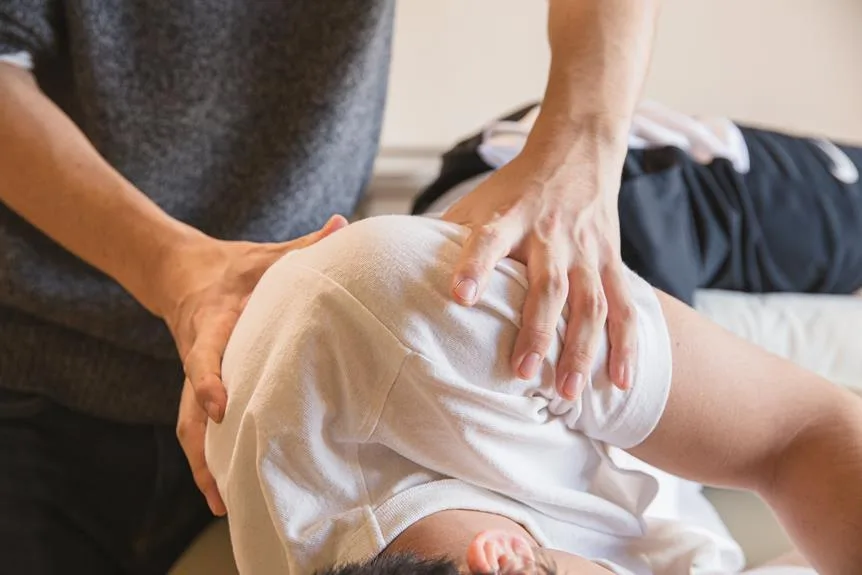
We must also consider the efficacy of manual therapy techniques, which physiotherapists employ to alleviate joint pain through hands-on interventions. These procedures are integral to a multifaceted treatment approach, aiming to improve joint function and reduce discomfort.
Here are three critical manual therapy techniques:
- Joint Manipulation: A precise, skilled movement applied to a joint at a high speed, often resulting in a noticeable pop or crack, which can lead to immediate improvements in mobility and pain reduction.
- Soft Tissue Mobilization involves rhythmic stretching and deep pressure on the muscles surrounding the affected joint to break down adhesions and increase circulation.
- Mobilisation Techniques: Gentle, controlled movements applied to joints or bones to restore motion and lessen pain without the high velocity used in manipulation.
These evidence-based interventions are tailored to each client's unique presentation and are delivered within the context of their overall therapeutic goals.
Pain Management Modalities
Employing a variety of pain management modalities, physiotherapists enhance joint pain treatment by applying heat, cold, electrical stimulation, and ultrasound therapy. Heat therapy improves circulation and relaxes muscles, while cold compresses effectively reduce inflammation and swelling. Both are evidence-based practices that can provide significant relief for joint pain.exercise
Here is a table outlining some of the common modalities used in physiotherapy for pain management:
| Modality | Purpose | Typical Use Case |
|----------|---------|------------------|
| Heat Therapy | Increase blood flow, reduce muscle spasms | Osteoarthritis, muscle stiffness |
| Cold Compresses | Decrease inflammation, numb pain | Acute injuries, post-surgical swelling |
| Electrical Stimulation | Stimulate muscles, release pain-relieving endorphins | Chronic pain conditions, rehabilitation |
| Ultrasound Therapy | Promote tissue healing, increase tissue relaxation | Tendonitis, bursitis |
These modalities, selected based on individual patient needs, form part of a comprehensive, client-centered treatment plan.
Strengthening and Stability Training
While pain management modalities address symptoms and facilitate recovery, strengthening and stability training are essential for rebuilding joint function and preventing future discomfort. These exercises not only aid in maintaining joint lubrication, which is crucial for smooth movement but also enhance the support around joints, reducing the risk of injury.
Here are three key points to consider:
- Targeted Muscle Strengthening: Focus on the muscles surrounding the affected joint to provide better support and reduce strain.
- Core Stability: A strong core is fundamental for overall balance and can minimise the stress on lower body joints, aiding in injury prevention.
- Progressive Overload: Gradually increasing the intensity ensures continued improvement without overburdening the joints, promoting long-term joint health and resilience.
Incorporating these strategies into a rehabilitation program can significantly improve outcomes for individuals suffering from joint pain.
Conclusion
In conclusion, evidence-based interventions for joint pain relief should encompass a multifaceted approach.
Comprehensive assessment and tailored exercise regimens are foundational.
Incorporating manual therapy and advanced pain management techniques further enhances outcomes.
Strengthening and stability training are critical for long-term joint health and function.
Clinicians must remain client-centred, ensuring therapeutic strategies align with individual needs and preferences to optimise adherence and efficacy in managing joint pain.
Ready to Get Help?
Book an appointment with one of our experienced Physiotherapy professionals across South West Sydney.
Book an AppointmentMedical Disclaimer
This article is intended for general informational and educational purposes only. It does not constitute medical advice and is not a substitute for professional diagnosis, treatment, or advice from a qualified healthcare provider. Always consult a registered physiotherapist, chiropractor, or other appropriate healthcare professional before starting any new treatment or exercise programme.