 (02) 9726 4491
3 Best Myofascial Release Techniques for Pain Relief

Clinically reviewed by Davey Nguyen, Remedial Massage Therapist · Association of Massage Therapists (AMT). This article is general information, not a substitute for an individual assessment.
3 Best Myofascial Release Techniques for Pain Relief
Myofascial release is a therapeutic approach designed to alleviate pain and restore motion by targeting the connective tissue that encases muscles throughout the body. Addressing myofascial pain, which often contributes to discomfort and restricts mobility, requires precise techniques that can be performed by professionals or through self-care practices.
This discussion will focus on the three most effective myofascial release methods that promote pain relief: the Foam Roller Method, the Ball Massage Technique, and Hands-On Stretching. Each technique offers unique advantages and can be tailored to meet individual needs, providing an essential toolkit for mitigating myofascial pain.
Understanding the application and benefits of these techniques is crucial for anyone looking to enhance their musculoskeletal health and overall well-being.
Foam Roller Method
Among the most effective myofascial release techniques is using a foam roller, which applies sustained pressure to relieve tension in the connective tissues. Pressure variation and roller selection are pivotal components in this method's success.
An optimal foam roller routine involves adjusting the pressure to accommodate individual pain thresholds and areas of tightness, fostering a personalised approach to myofascial release. The choice of roller—be it soft for beginners or dense for deeper penetration—can significantly affect the therapeutic outcome. A discerning selection tailored to the user's needs enhances the technique's efficacy, ensuring a balance between relief and comfort.
Practitioners must guide clients in these decisions, providing an empathetic understanding of their physical nuances and pain points.
Ball Massage Technique
Several balls—from tennis to lacrosse—serve as practical tools for targeted myofascial release, offering a more localised pressure application to alleviate muscle tightness and discomfort. This ball massage technique enables individuals to perform self-massage, honing in on those troublesome trigger points contributing to pain and restricted movement.
- Using the Ball Massage Technique:
- Identification: Locate the trigger point by palpating the muscle for tender areas.
- Placement: Position the ball directly beneath the identified trigger point.
- Application: Apply sustained pressure, adjusting the body's weight for intensity.
Through consistent practice, the ball massage approach can empower individuals with a self-care strategy, fostering autonomy in managing myofascial pain and enhancing overall well-being.
Hands-On Stretching
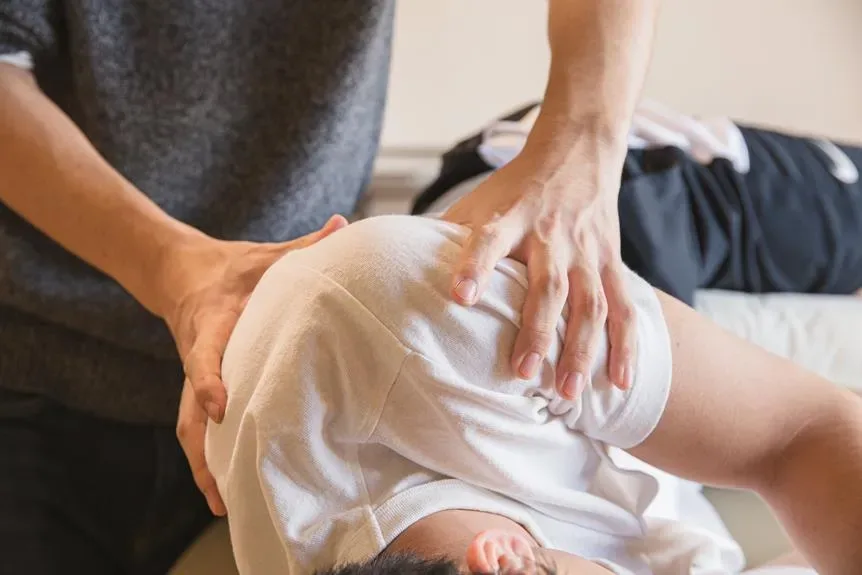
Hands-on stretching is an effective myofascial release technique that can help mitigate pain and enhance mobility. This modality works by applying sustained pressure and strategic stretching to the myofascial tissues, which promotes elasticity and blood flow. Trigger point therapy is a crucial element of this technique, as it involves applying focused pressure to specific tender areas to release knots that contribute to pain and restricted movement. Another critical approach is proprioceptive neuromuscular facilitation (PNF), which combines passive stretching and isometric contractions to deepen the stretch and improve muscle relaxation. By using these techniques together, musculoskeletal pain can be effectively addressed, the healing process can be facilitated, and the body's natural movement patterns can be supported. This ultimately leads to lasting relief and functional improvement for individuals facing discomfort and mobility limitations.
Conclusion
Myofascial release offers a therapeutic approach to alleviating pain through the Foam Roller Method, Ball Massage Technique, and Hands-On Stretching.
These techniques facilitate the release of fascial tension, enhance blood flow, and promote healing in affected tissues. Clinicians and patients can incorporate these methods into treatment regimens to effectively address musculoskeletal discomfort.
Continued research and clinical practice will refine these modalities for optimal pain management and functional improvement.
Ready to Get Help?
Book an appointment with one of our experienced Massage Therapy professionals across South West Sydney.
Book an AppointmentMedical Disclaimer
This article is intended for general informational and educational purposes only. It does not constitute medical advice and is not a substitute for professional diagnosis, treatment, or advice from a qualified healthcare provider. Always consult a registered physiotherapist, chiropractor, or other appropriate healthcare professional before starting any new treatment or exercise programme.