
 (02) 9726 4491
How Can Chiropractic Help You?
Chiropractic care focuses on diagnosing, treating, and preventing mechanical disorders of the musculoskeletal system, particularly the spine. Our AHPRA-registered chiropractors use a range of manual therapy techniques including spinal manipulation, mobilisation, and soft tissue work to restore normal movement and function — helping you get out of pain faster and stay pain-free longer.
 Neck pain and stiffnessBack pain and sciaticaHeadaches and migrainesJoint dysfunction and restricted movementPostural imbalances and scoliosis managementSports injuries and performance optimisationWork-related musculoskeletal disorders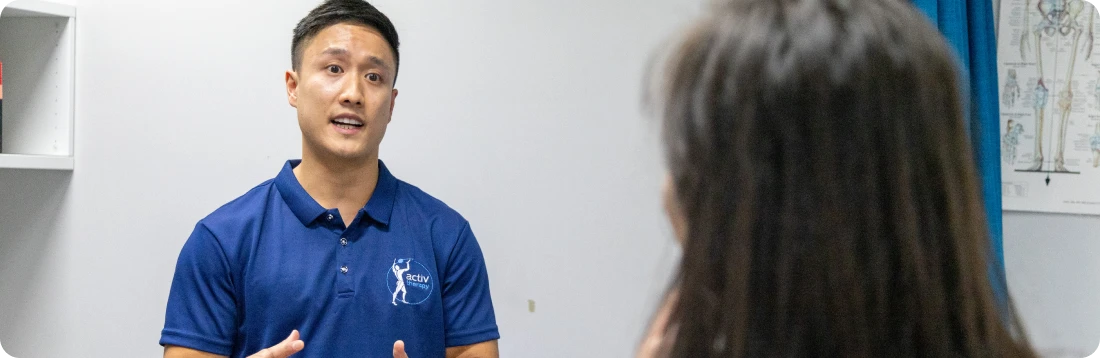
Focus on Hands-On Chiropractic Care
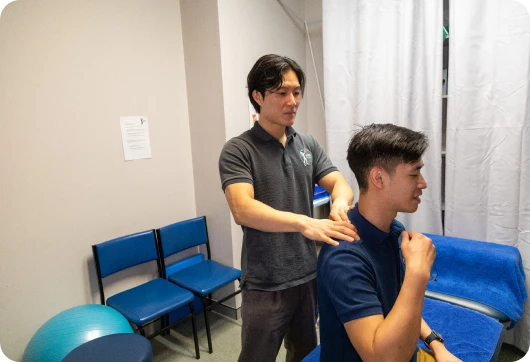
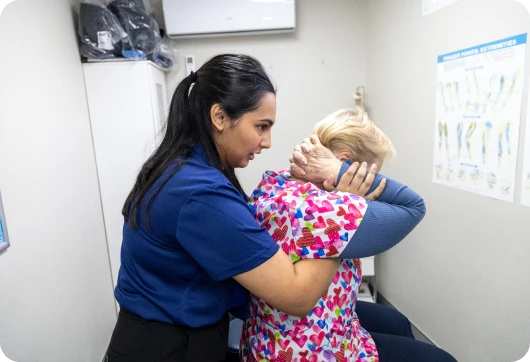
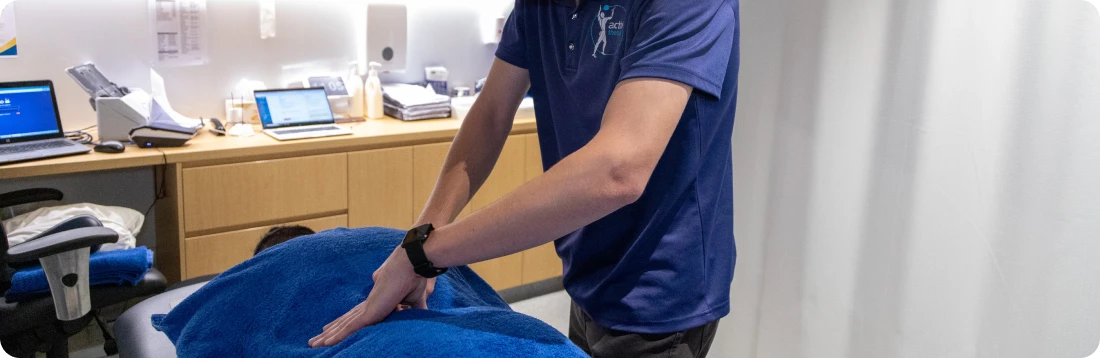
At Activ Therapy, our chiropractors take time to fully understand your history, lifestyle, and goals before creating a personalised treatment plan. Every consultation is one-on-one, hands-on, and focused on getting to the root cause of your problem. We don't believe in endless appointments — we aim to get you better as quickly as possible and equip you with the tools to maintain your results long term.
What Chiropractic Care Involves
Chiropractic care is about restoring normal movement to your spine and joints and relieving pressure on the surrounding muscles and nerves. It begins with a careful assessment so that every treatment is based on an accurate diagnosis — not guesswork.
Detailed history
Your chiropractor asks about your symptoms, past injuries, lifestyle, work and general health to build a complete picture of your problem.
Physical examination
We assess your posture, spinal movement, joints, muscles and nervous system with a range of orthopaedic and neurological tests.
Diagnosis & discussion
We explain what's causing your pain in plain language, whether chiropractic is right for you, and refer for imaging only if it's genuinely needed.
Tailored treatment plan
You receive a personalised plan with clear goals and expected timeframes — and, in most cases, your first treatment on the same day.
Understanding Chiropractic Adjustments
A chiropractic adjustment (also called spinal manipulation) is a precise, controlled movement applied to a joint that has become stiff or restricted. Using their hands or a small instrument, your chiropractor delivers a quick, gentle impulse to restore normal motion. This is what often produces the characteristic "pop" — simply gas releasing from the joint, not bones cracking.
The goal is to free up movement, ease muscle tension, and reduce irritation on nearby nerves — helping you move more comfortably and recover faster.
Does every patient get an adjustment?
No — and this is important. An adjustment is only one of the tools we use, and it isn't right for everyone. Your care is tailored to your condition, your comfort, and what the evidence supports.
Depending on what you need, treatment may include joint mobilisation, soft tissue and trigger-point therapy, dry needling, and rehabilitation exercise. If a manual adjustment isn't suitable — or you'd simply prefer a gentler approach — we have effective alternatives, and we'll always talk you through your options first.
Back Pain & Neck Pain Chiropractic Care
Back and neck pain are by far the most common reasons people see our chiropractors — and they're what we treat best. Whether your pain came on suddenly or has built up over years, we work to identify the true driver and get you moving freely again.
Back Pain
Lower back pain, sciatica, disc-related pain, and stiffness from prolonged sitting or heavy lifting. We combine hands-on treatment with targeted exercise to relieve pain and reduce the chance of it returning.
Neck Pain & Headaches
Neck stiffness, "tech neck" from desk and device use, whiplash, and tension headaches driven by the neck. We restore movement and address the postural habits keeping the pain going.
AHPRA Registered Chiropractors
All Activ Therapy chiropractors are fully registered with the Australian Health Practitioner Regulation Agency (AHPRA). Your safety and clinical outcomes are our highest priority. Our practitioners maintain ongoing professional development and uphold the highest standards of ethical and clinical practice.
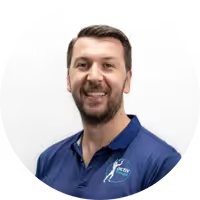
Meet Your Chiropractor




Chiropractic FAQs
In most cases, no. For the majority of back and neck pain, a thorough physical examination and history is all your chiropractor needs to diagnose your problem and start treatment safely. X-rays or scans are only recommended when there's a specific clinical reason — for example, suspected fracture, significant trauma, or certain red-flag symptoms. If imaging is genuinely needed, your chiropractor will explain why and arrange a referral.
Chiropractic Locations
Our chiropractors see patients across South West Sydney — find your nearest Activ Therapy clinic below.

Liverpool
Shop 199A Westfield Liverpool, Cnr Elizabeth Street and George Street, Liverpool NSW 2170
Casula
Casula Central, Unit 12B, 633-639 Hume Highway, Casula NSW 2170
Chipping Norton
Chipping Norton Market Plaza, Shop 15, 45 Barry Road, Chipping Norton NSW 2170
Eagle Vale
Eagle Vale Marketplace, 10 Feldspar Road, Eagle Vale NSW 2558
Prestons
Suite D2D Prestons Shopping Village, 57 Minnamurra Circuit, Prestons NSW 2170
Macquarie Fields
Glenquarie Town Centre, Shop 38a, Cnr Victoria Rd and Brooks St, Macquarie Fields NSW 2564
Moorebank
Shop 14B Moorebank Shopping Village, 42 Stockton Avenue, Moorebank NSW 2170
Clemton Park
Shop 9 Clemton Park Village, 5 Mackinder Street, Campsie NSW 2194
Gregory Hills
Unit 18/13 Digitaria Dr, Gledswood Hills NSW 2557
Sans Souci
438 Rocky Point Rd, Sans Souci NSW 2219
Winston Hills
Shop 6/7 Lomond Crescent, Winston Hills NSW 2153
Austral
Shop 13B/394 Fifteenth Ave, Austral NSW 2179
Get In Touch
Opening Hours
Mon – Fri: 7:00am – 7:00pm
Saturday: 8:00am – 2:00pm
Available across all 13 South West Sydney clinics.