 (02) 9726 4491
How to Fix Rounded Shoulders: 7 Corrective Exercises

Clinically reviewed by Matthew Calabrese, Physiotherapist · Australian Health Practitioner Regulation Agency (AHPRA). This article is general information, not a substitute for an individual assessment.

If you spend hours at a desk or looking at your phone, you've likely developed the telltale signs of rounded shoulders: a hunched upper back, shoulders that roll forward, and perhaps neck pain or headaches. Learning how to fix rounded shoulders isn't just about aesthetics—it's essential for preventing long-term musculoskeletal problems and improving your overall quality of life.
Rounded shoulders, often part of a postural imbalance called upper cross syndrome, occur when certain muscles become tight while others weaken. The good news is that with consistent corrective exercises and awareness, you can reverse this pattern and restore proper shoulder alignment.
Understanding What Causes Rounded Shoulders
Before diving into corrective exercises, it's important to understand the muscular imbalances behind rounded shoulders. This condition typically involves tight chest muscles, weak upper back muscles, and compromised core stability. When you maintain poor posture for extended periods, your body adapts to these positions, creating muscle memory that perpetuates the problem.
The primary culprits include shortened pectoral muscles that pull your shoulders forward, weak rhomboids and lower trapezius muscles that can't hold your shoulder blades in place, and a forward head position that throws off your entire postural alignment. Modern lifestyle factors—sitting at computers, driving, and smartphone use—all contribute to this muscular dysfunction.
Seven Effective Rounded Shoulder Exercises
Wall Angels
Stand with your back against a wall, feet slightly forward. Press your lower back, shoulders, and head against the wall. Raise your arms to form a 'W' shape, then slowly slide them up into a 'Y' position while maintaining contact with the wall. This exercise strengthens your upper back muscles while stretching tight chest muscles. Perform three sets of ten repetitions daily.
Doorway Chest Stretch
Stand in a doorway with your forearm placed against the door frame at a 90-degree angle. Step forward with one foot until you feel a gentle stretch across your chest and front shoulder. Hold for 30 seconds on each side, repeating three times. This posture correction exercise directly addresses the tight pectoral muscles that contribute to rounded shoulders.
Scapular Squeezes
Sit or stand with your arms at your sides. Pull your shoulder blades together, squeezing them as if you're trying to hold a pencil between them. Hold for five seconds, then release. This simple but effective exercise activates the rhomboid muscles that are often weak in people with forward shoulder posture. Aim for three sets of fifteen repetitions throughout your day.
Prone Y-T-W Raises
Lie face-down on the floor or an exercise bench with your arms hanging toward the ground. Raise your arms to form a 'Y' shape, hold for two seconds, then lower. Repeat with 'T' and 'W' positions. This exercise targets the often-neglected muscles of your upper back and posterior shoulder, helping to counteract the forward pull of rounded shoulders. Start with two sets of eight repetitions for each letter position.
Similar to how breathing exercises improve lung capacity, these shoulder exercises require consistent practice to see lasting improvements in your posture and mobility.
Chin Tucks
Sit or stand with your spine neutral. Gently draw your chin straight back, creating a double chin, without tilting your head up or down. Hold for five seconds. This forward head posture exercise helps realign your cervical spine and strengthens the deep neck flexors that support proper head position. These muscles work in conjunction with your shoulder stabilizers to maintain good posture. Perform three sets of ten repetitions daily.
Band Pull-Aparts
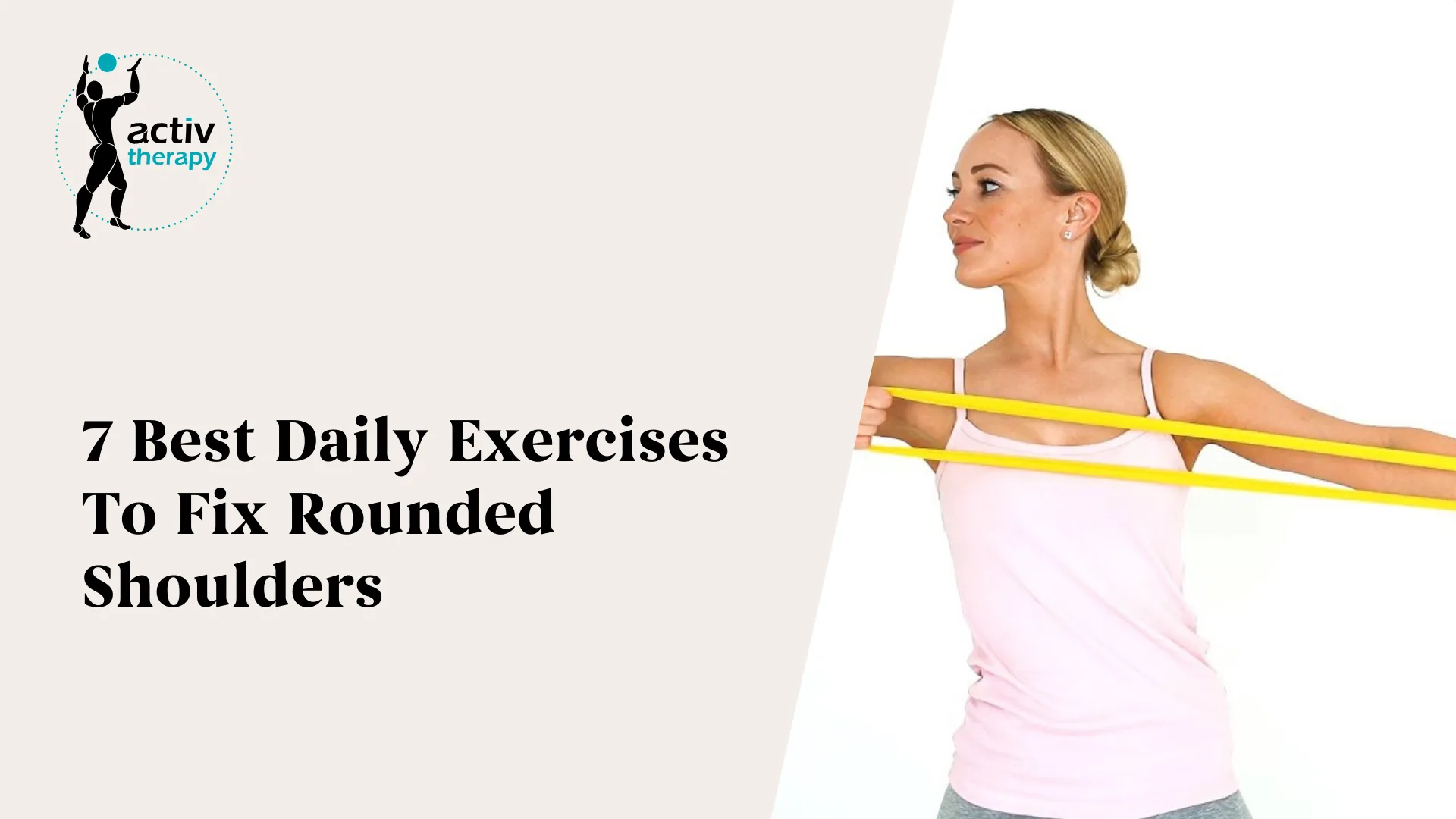
Hold a resistance band with both hands at shoulder height, arms extended. Pull the band apart by moving your hands away from each other while squeezing your shoulder blades together. Return slowly to the starting position. This desk posture exercise can be done anywhere and directly strengthens the muscles that retract your shoulder blades. Complete three sets of fifteen repetitions.
Child's Pose with Shoulder Rotation
Start in a traditional child's pose position. Walk your hands to the left side, feeling a stretch along your right side. Hold for 30 seconds, then repeat on the opposite side. This yoga-inspired movement stretches the latissimus dorsi muscles and promotes shoulder mobility, essential components of a comprehensive shoulder posture fix routine.
Building a Daily Routine for Postural Correction
Consistency matters more than intensity when addressing rounded shoulders. Rather than doing all exercises in one marathon session, distribute them throughout your day. Set reminders to perform chin tucks and scapular squeezes every hour during desk work. Dedicate ten minutes each morning to your stretching routine and another ten minutes in the evening for strengthening exercises.
Your core muscles play a crucial role in maintaining proper posture throughout your spine, including your shoulder position. Just as soft tissue manipulation addresses muscular restrictions, targeted exercises address the weakness patterns that allow rounded shoulders to develop.
Ergonomic Adjustments to Support Your Progress
Exercise alone won't fix rounded shoulders if you continue spending eight hours daily in poor posture. Adjust your workstation so your monitor sits at eye level, preventing forward head drift. Position your keyboard and mouse to allow your elbows to rest at 90 degrees with your shoulders relaxed. Use a lumbar support cushion to maintain the natural curve of your lower back, which influences your entire spinal alignment.
When using your smartphone, bring the device to eye level rather than looking down. This simple habit prevents the forward head posture that often accompanies rounded shoulders. Consider using a phone stand or holder when watching videos or reading for extended periods.
When to Seek Professional Help
While these exercises benefit most people with rounded shoulders, certain situations warrant professional assessment. If you experience persistent pain, numbness, or tingling in your arms or hands, consult a physiotherapist or chiropractor. These symptoms might indicate nerve compression or other underlying conditions requiring specialized treatment.
A qualified physiotherapist can assess your specific postural deviations, identify which muscles need the most attention, and create a personalized treatment plan. They might incorporate manual therapy techniques, progressive resistance training, or targeted stretching protocols based on your individual presentation.
Maintaining Your Results Long-Term
Fixing rounded shoulders isn't a temporary project—it requires ongoing attention to maintain proper alignment. Once you've corrected your posture, continue performing key exercises at least three times weekly. Stay mindful of your shoulder position throughout daily activities, regularly checking that your shoulders sit back and down rather than hunched forward.
Consider activities that naturally promote good posture, such as swimming (particularly backstroke), yoga, or Pilates. These disciplines emphasize body awareness, core strength, and balanced muscle development—all essential for preventing the return of rounded shoulders.
Remember that postural change happens gradually. You might notice improvements in how your clothes fit, reduced neck and shoulder tension, and better breathing within a few weeks. Significant structural changes typically require two to three months of consistent practice. Track your progress with monthly photos from the side view to visualize your improvements and stay motivated.
By addressing rounded shoulders through these targeted exercises and lifestyle modifications, you're investing in your long-term musculoskeletal health. The discipline you develop through this process will serve you well beyond just fixing your shoulder position—you'll gain valuable body awareness and healthy habits that support overall wellness for years to come.
Ready to Get Help?
Book an appointment with one of our experienced Physiotherapy professionals across South West Sydney.
Book an AppointmentMedical Disclaimer
This article is intended for general informational and educational purposes only. It does not constitute medical advice and is not a substitute for professional diagnosis, treatment, or advice from a qualified healthcare provider. Always consult a registered physiotherapist, chiropractor, or other appropriate healthcare professional before starting any new treatment or exercise programme.