 (02) 9726 4491
10 Single-Leg Balance Exercises to Improve Stability and Prevent Falls

Clinically reviewed by Andy Kha, Physiotherapist · Australian Health Practitioner Regulation Agency (AHPRA). This article is general information, not a substitute for an individual assessment.
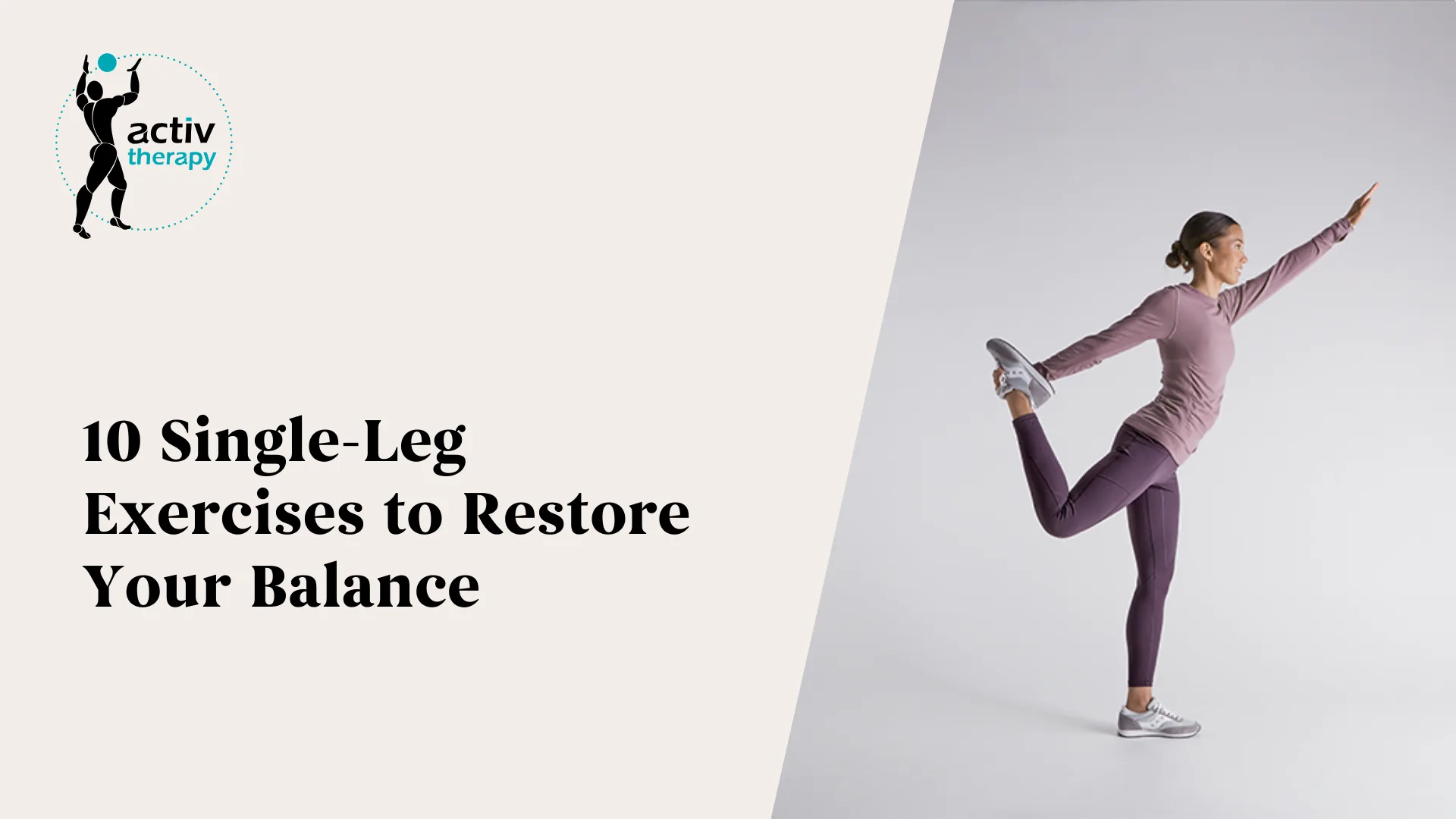
Balance is often overlooked until it's compromised, yet it remains fundamental to every movement we make. Whether you're recovering from injury or seeking better stability in daily activities, single-leg balance training offers a targeted approach to rebuilding this essential skill. While many focus solely on strength or cardiovascular fitness, the ability to maintain control on one leg impacts everything from walking up stairs to preventing falls. Through a progressive series of exercises that challenge both static and dynamic stability, these ten carefully selected drills offer a systematic path to restore and enhance your natural balance capabilities.
Why Single-Leg Balance Exercises Matter
Single-leg balance exercises develop proprioception—your body's ability to sense its position in space. This awareness is crucial for preventing falls, particularly in older adults. Research shows that improved single-leg stability directly correlates with reduced fall risk and better functional movement in daily activities. These exercises also strengthen the smaller stabilising muscles around your ankles and hips that often get neglected in traditional strength training.
Beyond fall prevention, single-leg stability exercises enhance athletic performance, support injury recovery, and improve overall movement quality. They reveal and correct imbalances between your left and right sides, ensuring more symmetrical strength development. For anyone looking to maintain independence and mobility as they age, mastering these leg balance exercises is essential.
Static Single Leg Hold
The foundation of balance training begins with the Static Single Leg Hold, a fundamental exercise that develops stability and proprioception. This essential drill serves as a cornerstone for more advanced single-leg balance exercises and helps establish proper alignment and control through the lower body.
To perform the single leg hold correctly, start by standing on one leg whilst maintaining vertical alignment of your ear, shoulder, and hip. Distribute your weight evenly across three key points of the foot: the big toe, pinky toe, and heel. This triangular base creates a stable foundation for the exercise. Keep a slight bend in the standing leg's knee, avoiding the common mistake of locking it straight, which can compromise joint stability and reduce muscle engagement.
For those new to balance training or requiring additional support, using a stick or stable object for assistance is perfectly acceptable. This modification allows practitioners to focus on proper form whilst gradually building confidence and stability. As balance improves, reduce reliance on external support to challenge the body's natural stabilising mechanisms.
The effectiveness of this exercise lies in maintaining proper posture throughout the single leg balance hold. Focus on engaging the hip muscles of the standing leg whilst keeping the pelvis level. Regular practice enhances hip stability, strengthens the smaller balancing muscles around the ankle, and improves overall postural control. These adaptations translate to better balance in daily activities and serve as a foundation for more challenging balance training progressions. Similar to balance training tips to prevent falls, this exercise forms the foundation of a comprehensive fall prevention program.
High March With Twist
Building upon the foundation of static balance, High March With Twist introduces dynamic movement while challenging rotational stability. This exercise combines single-leg balance with controlled upper body rotation, engaging multiple muscle groups while improving coordination and core strength.
To perform the High March With Twist, start by standing tall with feet hip-width apart. Shift your body weight onto your right leg while lifting your left knee to hip height. Maintain this position as you rotate your torso to the left, keeping your hips square and stable. Your arms should be held at shoulder height, moving naturally with the rotation. Return to centre, then lower your left leg and repeat on the opposite side.
The key to mastering this single-leg stability exercise lies in maintaining proper form throughout the movement. Keep your standing leg slightly bent, engage your core, and avoid leaning to compensate for the rotation. Your body weight should remain centred over your supporting foot, with minimal lateral sway. Begin with 5-8 repetitions per side, gradually increasing as your balance improves.
Common mistakes include rushing the movement, excessive hip rotation, and poor posture. Focus on controlled, deliberate movements while keeping your chest lifted and shoulders relaxed. If you find the exercise challenging, perform it near a wall for support or reduce the height of your knee lift until you build confidence on one leg.
This dynamic drill effectively bridges the gap between static balance work and more complex movement patterns, making it an essential progression in balance restoration. For those recovering from stroke, incorporating post-stroke mobility exercises alongside balance training can significantly enhance recovery outcomes.
Side Lunge Balance Transfer
While High March With Twist emphasises rotational control, Side Lunge Balance Transfer challenges lateral stability and weight shifting abilities through a broader range of motion. This dynamic balance training exercise develops strength and control in multiple planes of movement, particularly targeting the often-neglected lateral movement patterns essential for daily activities and sports performance.
Begin in a standing position with feet hip-width apart. Initiate the movement by stepping one leg out to the side, gradually transferring your body weight onto that leg. Maintaining proper alignment is key—keep your torso upright and core engaged throughout the motion. As you shift your weight, focus on establishing a stable base with the working leg while avoiding any unnecessary lean or compensation in your upper body.
Once you've achieved balance on the single leg, hold this position momentarily to reinforce neuromuscular control. Then, with controlled precision, return to the starting position and repeat the movement on the opposite side. The exercise specifically engages the inner thighs and outer glutes while simultaneously challenging your body's proprioceptive systems.
For optimal results, perform 10-15 repetitions per side. Each movement should be deliberate and controlled, allowing you to develop greater awareness of your body's position in space. This methodical approach ensures maximum benefit from the exercise while minimising the risk of loss of balance or improper form. Regular practice of this movement pattern enhances both dynamic stability and lower body strength, contributing to improved overall balance and movement efficiency.
Single Leg Deadlift
Among the most effective unilateral exercises for developing balance and strength, single-leg deadlifts challenge practitioners to maintain stability whilst performing a complex hip-hinging movement pattern. This powerful exercise demands full-body control as you hinge at the hips while extending the opposite leg, all whilst maintaining proper postural alignment throughout the movement.
The single-leg deadlift specifically targets the posterior chain, with particular emphasis on glute activation and core engagement. By requiring controlled weight transfer and precise hip mechanics, these single-leg exercises enhance postural awareness and proprioception. The movement's complexity makes it an excellent tool for developing the neuromuscular control necessary for improved single-leg function in daily activities and athletic performance.
For those new to the movement or lacking sufficient balance and strength, modifications can make the exercise more accessible. Using a wall or bench for support allows practitioners to focus on proper form whilst gradually building the confidence and stability needed for independent execution. As balance improves, reducing reliance on external support helps progress toward the full movement.
Consistent practice of single-leg deadlifts is essential for achieving optimal results. Regular incorporation of this exercise into training routines helps develop the strength, stability, and balance needed for better unilateral movement patterns. As practitioners advance, they can increase the challenge by adding weight or removing assistance, making it a versatile exercise that grows with their capabilities. Many seniors find that combining this exercise with physio exercises for arthritis relief provides comprehensive lower body strengthening.
External Hip Rotation Stand
The External Hip Rotation Stand further develops single-leg stability by introducing controlled rotational movement to balance training. This dynamic exercise challenges your balance while specifically targeting the outer hip muscles and core stabilisers, essential components for maintaining equilibrium during daily activities and athletic movements.
When performing this exercise, begin by standing on one leg with your hips squared forward. Maintain a slight bend in the standing knee to prevent joint locking and promote active muscle engagement. The key movement involves deliberately rotating the hip and knee of your supporting leg outward while maintaining your balance and posture. This rotation should be controlled and smooth, focusing on engaging the hip muscles throughout the movement.
For those new to this single-leg balance exercise, using a wall or chair for support is recommended. This external support allows you to focus on proper form while gradually building confidence and stability. As your balance improves, reduce your reliance on support and progressively increase your range of motion.
To maximise the benefits of this drill, perform 10-15 repetitions on each leg, incorporating it into your routine 2-3 times per week. Pay careful attention to maintaining proper alignment throughout the movement, keeping your core engaged and hips level. This consistent practice will enhance your dynamic balance, strengthen your hip stabilisers, and improve your overall lower body control. Remember to perform the exercise on both sides equally to maintain bilateral strength and stability.
Reverse Step Balance
Mastering reverse step balance drills offers a necessary progression in single-leg stability training by incorporating backward movement patterns with balance challenges. This exercise builds upon foundational balance work while adding dynamic movement that challenges proprioception and spatial awareness, making it particularly beneficial for those looking to improve their overall stability and coordination.
To perform the reverse step balance, start by standing tall with feet hip-width apart. Shift your weight onto your right leg whilst maintaining proper posture. Slowly extend your opposite leg behind you, taking a controlled step backward whilst keeping your torso upright. Lower your body by bending both knees, creating a reverse lunge position. The crucial element comes when you pause at the bottom position, maintaining balance on the front leg whilst the back leg hovers slightly above the ground.
The exercise becomes more challenging as you return to the starting position. Push through your front foot whilst maintaining balance, and bring your back leg forward without letting it touch the ground between repetitions. Focus on controlled movement throughout the entire range of motion, avoiding any sudden or jerky movements that could compromise form.
Common mistakes include leaning the torso forward, allowing the front knee to cave inward, or rushing through the movement. To ensure maximum benefit, maintain a steady pace, keep your core engaged, and focus your gaze forward. Start with 8-10 repetitions on each leg, gradually increasing the number as your single-leg balance improves.
Aeroplane Balance Position
Soaring like its namesake, the aeroplane balance position elevates single-leg training by combining hip-hinging mechanics with postural control and balance demands. This advanced movement, also known as the single-leg deadlift aeroplane, challenges practitioners to maintain stability while moving through different planes of motion. The exercise requires coordinated engagement of the glutes while maintaining proper posture through the shoulders and spine.
The movement pattern begins with a hip hinge on the standing leg while extending the opposite leg behind the body. As practitioners progress through the planes of motion, maintaining squared shoulders and proper spinal alignment becomes essential for optimal execution. The exercise's effectiveness lies in its ability to simultaneously challenge full-body control while developing functional strength and stability.
For those new to this position or lacking the necessary strength, using assistance is recommended. This might include holding onto a wall or stable surface until adequate balance and control are developed. With consistent practice, practitioners can progressively reduce their reliance on support as their stability improves.
The aeroplane balance position serves as an excellent diagnostic tool for identifying asymmetries and balance deficiencies while providing a practical method for addressing these issues. Regular incorporation of this movement can lead to enhanced postural awareness, improved single-leg stability, and better overall movement quality. As balance and control improve, practitioners can explore more challenging variations while maintaining the fundamental principles of the exercise. Just as mobility aid training helps seniors maintain independence, mastering balance exercises supports long-term functional mobility.
Core Engaged Leg Lift
Building upon the stability principles of the aeroplane position, core engaged leg lifts offer a fundamental approach to developing single-leg balance and trunk control. This exercise emphasises the connection between core activation and lower extremity stability, making it an essential progression in balance training.
To perform the core engaged leg lift effectively, ensure you begin by activating your deep abdominal muscles before initiating any movement. As you lift one leg off the ground, maintain strict control over your hip position, preventing any unwanted rotation or tilting. The supporting leg should remain steady, acting as a stable foundation throughout the exercise.
The key to maximising the benefits lies in the quality of movement rather than the height of the leg lift. Focus on keeping your hips level and aligned as you slowly elevate your leg, being mindful not to compromise form for range of motion. Your core engagement should remain consistent throughout both the lifting and lowering phases of the movement.
Practice this leg exercise for balance on both legs to develop balanced strength and control. Pay particular attention to any differences in stability between sides, as this can highlight areas needing additional focus. The controlled nature of this movement challenges not only your core strength but also enhances your proprioceptive awareness and single-leg stability. Regular practice of core engaged leg lifts will contribute to improved balance control in daily activities and more advanced balance exercises.
Standing Balance With Reach
The dynamic nature of Standing Balance With Reach elevates single-leg stability training to a new level of complexity. This exercise challenges the body's proprioceptive system while integrating upper body movement, making it particularly effective for developing comprehensive balance control. As you perform the movement, focus on maintaining even pressure through your big toe, pinky toe, and heel of the standing leg to create a stable foundation.
To execute the exercise, begin by establishing a solid single-leg stance. Once balanced, extend the opposite arm overhead whilst keeping your torso stable and aligned. Pay careful attention to maintaining proper posture throughout the reaching motion, ensuring that compensatory movements don't compromise your form. The reaching action should be smooth and controlled, extending only as far as you can whilst maintaining stability.
For optimal results, practice this exercise on both sides to identify and address any asymmetries in balance and control. You may notice that one leg provides better stability than the other, which is valuable information for targeting areas that need improvement. As your balance improves, progress the exercise by incorporating variations such as closing your eyes or reaching in different directions. These modifications increase the demand on your proprioceptive system and core muscles.
When performing multiple repetitions, focus on quality over quantity. Each reach should be deliberate and controlled, with your standing leg maintaining solid contact with the ground through all points of the foot. This attention to detail ensures maximum benefit from the single-leg balance exercise while building functional stability for everyday activities. For older adults concerned about maintaining independence, these exercises complement home safety modifications to create a comprehensive fall prevention strategy.
Single Leg Squat Progression
After mastering standing balance with reach exercises, single-leg squat progressions represent a natural advancement in unilateral lower body training. This progression challenges both stability and strength whilst developing greater control throughout the kinetic chain. The key is to start with partial ranges of motion and gradually work toward full depth as technique and confidence improve.
Begin with a quarter-depth single-leg squat, maintaining a neutral spine and keeping the working knee aligned with the second toe. The non-working leg should be held slightly behind the body, allowing for both forward and backward adjustments to maintain balance. Focus on initiating the movement by hinging at the hips rather than leading with the knee.
As proficiency increases, progress to half-depth squats whilst maintaining proper form. Pay particular attention to preventing the working knee from collapsing inward, as this indicates insufficient hip stability. The lower body must work as an integrated unit, with the glutes, quadriceps, and core muscles engaging simultaneously to control the movement.
The final progression involves full-depth single-leg squats. At this stage, emphasis should be placed on smooth, controlled descents and powerful ascents. Keep the chest up and maintain a steady gaze point to optimise balance. If needed, use light fingertip support on a wall or sturdy object until balance improves. Once mastered, this exercise becomes an excellent tool for identifying and addressing any remaining asymmetries in lower body strength and control.
How to Progress Your Single-Leg Balance Training
Progressive overload is essential for continuing to improve your single-leg balance over time. Start by mastering each exercise with eyes open, then progress to eyes closed to remove visual feedback and challenge your proprioceptive system. You can also perform these single-leg stability exercises on unstable surfaces like foam pads or balance discs once you've built a solid foundation.
Track your performance by timing how long you can hold static positions or counting repetitions for dynamic movements. Aim to increase duration or reps by 10-20% each week. If you experience pain or excessive wobbling, regress to an easier variation until you rebuild confidence and control. Consistency matters more than intensity—practice these leg balance exercises 3-4 times per week for best results.
For seniors or those with limited mobility, combining these exercises with home balance exercises to prevent falls creates a comprehensive program that can be performed safely without special equipment. Always consult with a physiotherapist if you have existing balance issues or fall risk factors.
Conclusion
Single-leg balance exercises represent a fundamental component of functional movement training and fall prevention protocols. Through progressive implementation of static holds, dynamic movements, and complex stability drills, these exercises effectively enhance proprioception, core strength, and overall balance control. Incorporating varied sensory challenges and movement patterns ensures comprehensive neuromuscular development. This systematic approach to balance restoration supports both athletic performance and daily functional movement capabilities, helping you maintain independence and confidence in all activities.
Ready to Get Help?
Book an appointment with one of our experienced Sports Physiotherapy professionals across South West Sydney.
Book an AppointmentMedical Disclaimer
This article is intended for general informational and educational purposes only. It does not constitute medical advice and is not a substitute for professional diagnosis, treatment, or advice from a qualified healthcare provider. Always consult a registered physiotherapist, chiropractor, or other appropriate healthcare professional before starting any new treatment or exercise programme.