 (02) 9726 4491
Single Leg Balance Test: 7 Exercises to Improve Stability

Clinically reviewed by Matthew Calabrese, Physiotherapist · Australian Health Practitioner Regulation Agency (AHPRA). This article is general information, not a substitute for an individual assessment.

Your ability to maintain single leg balance reveals more about your overall health than you might expect. This simple yet powerful assessment tests your proprioception, core stability, and neuromuscular control all at once. Whether you're recovering from an injury, working to prevent falls, or enhancing athletic performance, improving your standing balance is essential for maintaining independence and reducing injury risk.
The single leg stance test is commonly used by physiotherapists to identify balance deficits and track progress over time. Adults under 60 should be able to hold a single leg balance for at least 30 seconds, while older adults typically manage 15-20 seconds. If you're falling short of these benchmarks, the following balance exercises will help you build the stability training foundation you need.
Understanding the Single Leg Balance Test
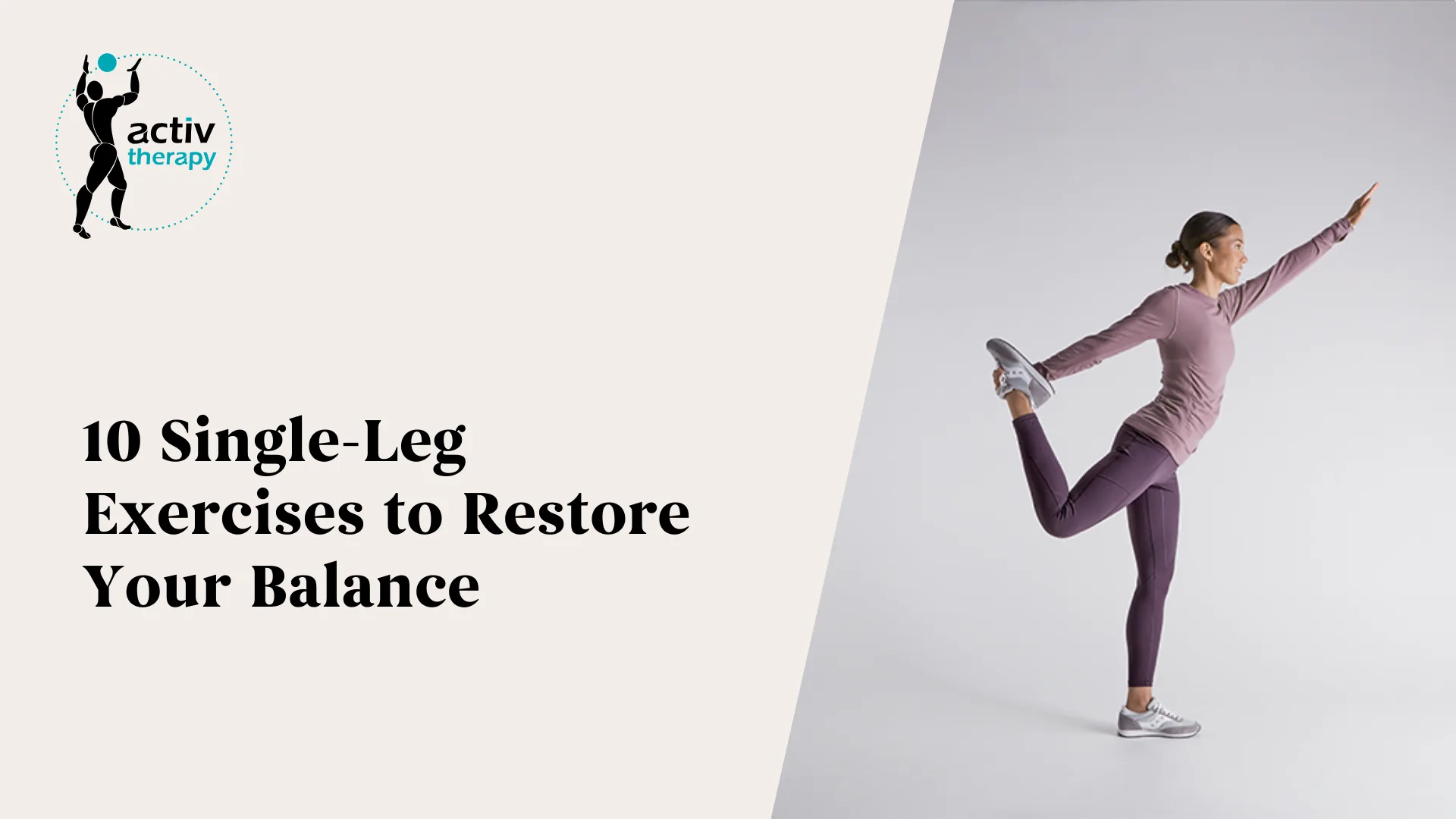
Before diving into exercises, it's helpful to understand what the test measures. Stand on one leg with your hands on your hips, keeping the lifted foot from touching the standing leg. The test ends when you move your hands from your hips, touch the floor with your lifted foot, or lose your position. This assessment evaluates several systems simultaneously: your vestibular system, visual input, proprioceptive feedback, and muscular strength.
Poor performance often indicates weakness in hip stabilisers, reduced ankle mobility, or compromised proprioception. These deficits increase fall risk significantly, particularly in older adults. Balance training tips to prevent falls become crucial as we age, making early intervention through targeted exercises vital for maintaining long-term mobility.
Seven Exercises to Improve Single Leg Balance
1. Supported Single Leg Stance
Start by standing next to a sturdy surface like a countertop or wall. Lift one foot slightly off the ground while lightly touching the support with your fingertips. Hold for 10-30 seconds, then switch legs. As your confidence builds, reduce contact with the support until you're using just one finger, then progress to no support at all.
This foundational exercise builds confidence while training the neural pathways necessary for balance. Focus on engaging your core and maintaining an upright posture throughout. If you're working on rehabilitation following surgery, exercises like those recommended in post-knee replacement recovery often incorporate similar progressive loading patterns.
2. Single Leg Stance with Eye Movements
Once you can comfortably stand on one leg for 30 seconds, add visual challenges. Stand on one leg and slowly move your eyes left to right, then up and down, while maintaining your balance. This proprioception exercise forces your body to rely more heavily on vestibular and proprioceptive input rather than visual cues.
The connection between visual tracking and balance is particularly relevant for those experiencing dizziness or vertigo. Vestibular exercises for vertigo often incorporate similar eye movement patterns to retrain the balance system after inner ear disturbances.
3. Single Leg Reach
Stand on one leg and slowly reach forward with the opposite hand as if touching something at waist height. Return to centre, then reach to the side and finally behind you. Perform 8-10 reaches in each direction before switching legs. This dynamic movement challenges your stability in multiple planes while improving functional balance.
This exercise mimics real-world movements like reaching for objects on shelves or bending to pick things up from the floor. The multi-directional reaches train your hip stabilisers to maintain control during everyday activities, reducing the likelihood of balance loss during routine tasks.
4. Single Leg Clock Taps
Imagine standing in the centre of a clock face. Balance on your right leg and tap your left toe at 12 o'clock, then 3 o'clock, 6 o'clock, and 9 o'clock positions. Complete 2-3 full rotations before switching legs. This exercise combines balance with coordinated movement, improving both stability and motor control.
The controlled tapping motion requires precise neuromuscular coordination while maintaining a stable base of support. As you become more proficient, increase the distance of your taps or speed up the movement to progress the challenge.
5. Single Leg Balance on Unstable Surface
Progress your single leg stance by standing on a pillow, foam pad, or balance disc. The unstable surface forces your foot and ankle muscles to work harder, enhancing proprioceptive feedback. Start with 10-15 seconds and gradually increase duration as your control improves.
This advanced variation is particularly beneficial for athletes returning to sport or older adults working to reduce fall risk. Similar principles apply to hip mobility exercises, where progressive challenge ensures continued adaptation and strength gains.
6. Single Leg Balance with Ball Toss
Stand on one leg while tossing and catching a small ball or bean bag. Start by tossing it to yourself, then progress to throwing against a wall or with a partner. This dual-task training mimics real-world situations where you need to maintain balance while focusing on another activity.
Dual-task balance training is particularly important for fall prevention, as most falls occur when attention is divided between balance and another task. The cognitive challenge of tracking and catching the ball while maintaining stability strengthens the neural pathways responsible for automatic balance responses.
7. Single Leg Squat (Pistol Squat Progression)
While maintaining single leg stance, perform a small knee bend, lowering your hips 15-30 centimetres before returning to standing. Keep your lifted leg extended in front for counterbalance. This exercise builds strength in the stabilising muscles while challenging balance dynamically.
The single leg squat represents a functional movement pattern used countless times daily when climbing stairs, standing from a chair, or stepping over obstacles. It combines strength and balance demands, making it one of the most effective stability training exercises available.
Creating Your Single Leg Balance Program
Begin with exercises 1-3, performing them daily for 2-3 weeks before progressing. Consistency matters more than intensity when building balance. Aim for 3 sets of each exercise, holding positions for 30 seconds or completing 8-10 repetitions of dynamic movements.
Track your progress by timing your unassisted single leg stance weekly. You should notice improvements within 3-4 weeks of consistent practice. If you experience pain or excessive difficulty, consider consulting a physiotherapist who can assess your specific limitations and design a personalised program. Many people wonder about treatment options when starting rehabilitation, and resources like comparing chiropractic and physiotherapy approaches can help you understand which professional might best support your goals.
Safety Considerations and Modifications
Always practice balance exercises near a stable surface you can quickly grab if needed. Remove tripping hazards from your practice area and consider exercising in a corner where walls are accessible on two sides. If you have a history of falls or significant balance impairment, have someone nearby during your initial sessions.
Those with specific conditions like peripheral neuropathy, vestibular disorders, or recent lower limb injuries should consult their healthcare provider before beginning balance training. These exercises complement but don't replace professional assessment and treatment. Additionally, maintaining overall physical fitness through programs focused on home balance exercises supports your single leg balance development.
Measuring Progress Beyond the Test
While the single leg balance test provides an objective measure of improvement, pay attention to functional changes in daily life. You might notice improved confidence when walking on uneven surfaces, better stability when reaching for high shelves, or enhanced performance in sports requiring quick direction changes.
These real-world improvements matter more than test scores alone. Better balance translates to reduced fall risk, maintained independence, and enhanced quality of life. Regular practice of these seven exercises provides a foundation for lifelong stability, helping you stay active and confident in all your movements.
Ready to Get Help?
Book an appointment with one of our experienced Physiotherapy professionals across South West Sydney.
Book an AppointmentMedical Disclaimer
This article is intended for general informational and educational purposes only. It does not constitute medical advice and is not a substitute for professional diagnosis, treatment, or advice from a qualified healthcare provider. Always consult a registered physiotherapist, chiropractor, or other appropriate healthcare professional before starting any new treatment or exercise programme.