 (02) 9726 4491
5 Best Herniated Disc Exercises for Pain Relief

Clinically reviewed by Matthew Calabrese, Physiotherapist · Australian Health Practitioner Regulation Agency (AHPRA). This article is general information, not a substitute for an individual assessment.

A herniated disc can transform simple daily activities into painful challenges, affecting your work, sleep, and overall quality of life. While the discomfort may tempt you to rest completely, evidence-based herniated disc exercises play a crucial role in recovery. The right movements strengthen supporting muscles, improve flexibility, and reduce pressure on affected nerves, providing lasting relief beyond temporary pain management.
Understanding which exercises help and which might worsen your condition is essential for safe, effective recovery. This guide outlines five physiotherapy-recommended exercises that address the mechanical and neuromuscular aspects of herniated disc pain, particularly in the lower back where these injuries most commonly occur.
Understanding Herniated Disc Pain and Exercise
A herniated disc occurs when the soft inner material of a spinal disc pushes through a tear in its outer layer, potentially pressing on nearby nerves. This creates inflammation, pain, numbness, or weakness that may radiate down your legs. While severe cases require medical intervention, most people experience significant improvement through targeted herniated disc treatment that includes specific exercises.
The key principle behind therapeutic exercise for disc injuries is directional preference. Your spine may feel better with certain movements while others increase symptoms. Generally, exercises that promote neutral spine positioning and avoid excessive forward bending prove most beneficial during the acute phase. As symptoms improve, core exercises for herniated disc recovery become increasingly important to prevent recurrence.
Before beginning any exercise programme, consult with a qualified physiotherapist who can assess your specific condition and ensure these movements are appropriate for your recovery stage. Similar to how soft tissue manipulation requires professional guidance for optimal results, herniated disc exercises demand proper technique and progression.
Best Herniated Disc Exercises for Recovery
1. Prone Press-Up (McKenzie Extension)
The prone press-up is one of the most effective exercises for herniated disc recovery, particularly for posterior disc herniations. This movement gently extends the spine, potentially helping the disc material migrate back toward its central position whilst reducing nerve compression.
To perform this exercise, lie face-down on a firm surface with your hands positioned beneath your shoulders. Slowly press your upper body up while keeping your hips on the ground, allowing your lower back to arch gently. Hold for two seconds, then lower back down. Begin with 10 repetitions every two hours during the acute phase.
Start with partial press-ups if full extension causes pain, gradually progressing as symptoms allow. This exercise should centralise pain (move it toward your spine rather than down your leg), which indicates positive progression.
2. Bird Dog Exercise
The bird dog exercise represents an excellent core exercise for herniated disc rehabilitation because it strengthens the deep stabilising muscles without excessive spinal loading. These muscles support your spine during daily activities, reducing strain on injured discs.
Start on your hands and knees with a neutral spine position. Slowly extend your right arm forward and left leg backward simultaneously, maintaining a stable, level pelvis and spine. Hold for five to ten seconds, then return to the starting position and repeat on the opposite side. Complete 10 repetitions per side.
The critical element is maintaining a stable, neutral spine throughout the movement. Avoid twisting, arching, or allowing your hips to tilt. Just as proper breathing technique enhances lung capacity exercises, controlled breathing during the bird dog improves core activation and exercise effectiveness.
3. Pelvic Tilts
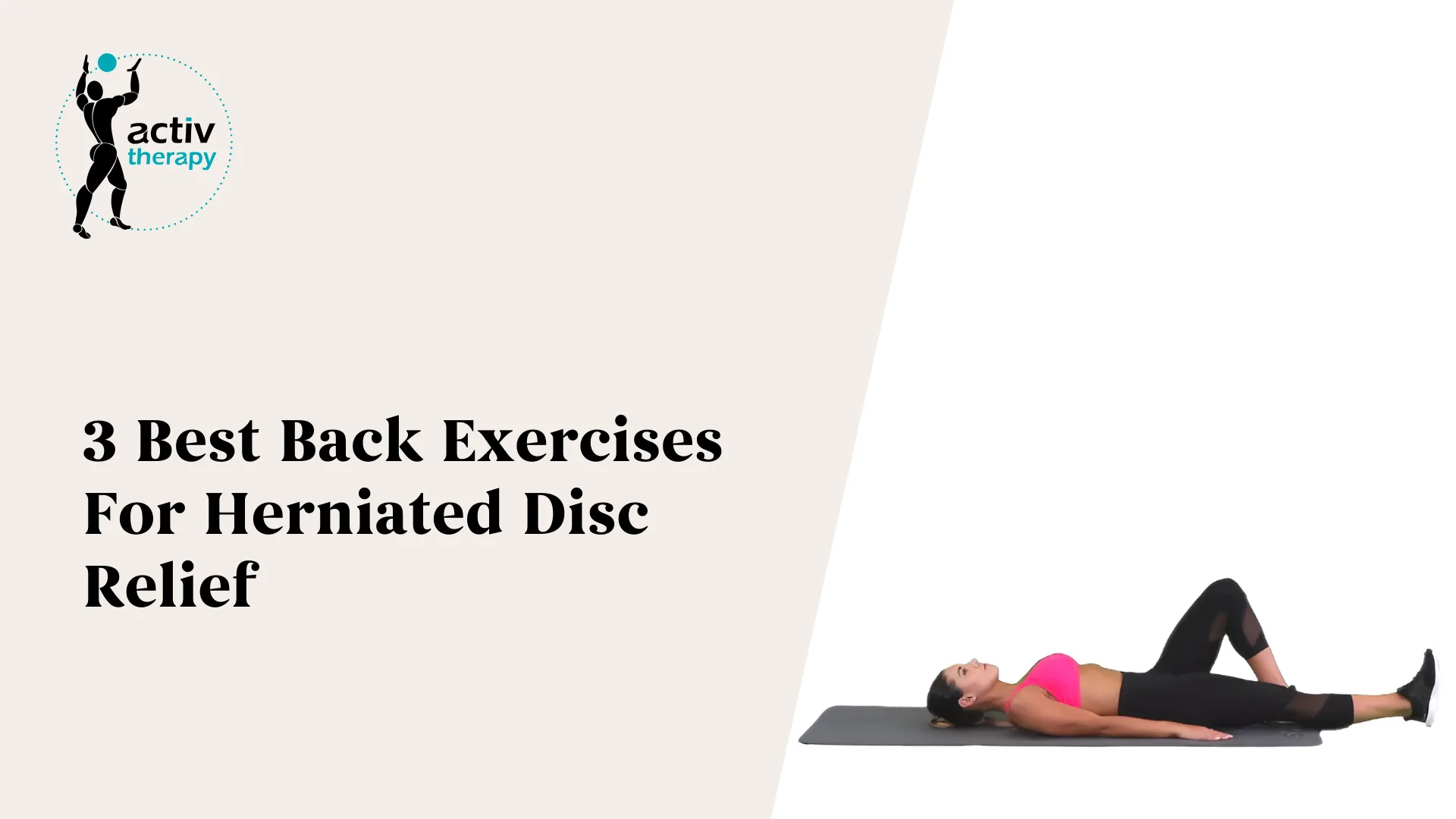
Pelvic tilts serve as gentle lower back disc exercises that improve spinal mobility and strengthen abdominal muscles without aggravating disc injuries. This low-impact movement helps you develop body awareness and control over spinal positioning.
Lie on your back with knees bent and feet flat on the floor. Gently flatten your lower back against the floor by tilting your pelvis upward, engaging your abdominal muscles. Hold for five seconds, then relax to neutral. Perform 15 repetitions, two to three times daily.
This exercise also helps identify your neutral spine position, which you'll maintain during more advanced movements. Progress slowly, focusing on quality of movement rather than quantity or speed.
4. Partial Crunches
Partial crunches strengthen the rectus abdominis and oblique muscles, providing anterior support for your spine. These modified crunches protect your healing disc by avoiding full sit-ups, which can increase intradiscal pressure.
Lie on your back with knees bent and arms crossed over your chest or placed behind your head for light support. Slowly lift your shoulders off the ground, raising your upper back about 15-20 centimetres. Hold for two seconds, then lower with control. Complete 10-15 repetitions, gradually increasing as strength improves.
Keep your lower back pressed to the floor throughout the movement, and avoid pulling on your neck. This exercise complements other bulging disc exercises by building anterior core strength whilst maintaining safe spinal alignment.
5. Hamstring Stretches
Tight hamstrings contribute to lower back stress by limiting hip mobility and increasing compensatory movement in the lumbar spine. These stretches complement other herniated disc stretches by addressing a common contributing factor to disc strain.
Lie on your back near a doorway with one leg extended through the opening. Raise the other leg against the door frame, keeping it as straight as comfortable. Hold for 30 seconds, feeling a gentle stretch along the back of your thigh. Repeat three times per leg, twice daily.
Alternatively, sit on the edge of a chair with one leg extended straight. Gently lean forward from your hips while keeping your back straight until you feel a comfortable stretch. Never force the stretch or bounce, as this may increase muscle tension rather than relieving it.
Exercise Progression and Safety Guidelines
Successful herniated disc recovery requires gradual progression and attention to your body's signals. Begin with basic exercises during the acute phase, focusing on pain centralisation and gentle movement. As symptoms improve over several weeks, progressively increase repetitions, duration, and exercise difficulty.
Monitor your symptoms closely during and after exercise. Some mild discomfort is normal, but sharp pain, increased numbness, or symptoms radiating down your leg indicate you should stop and consult your physiotherapist. Just as precision matters in balance training to prevent falls, careful attention to form and progression prevents setbacks in disc rehabilitation.
Consistency matters more than intensity during rehabilitation. Performing exercises two to three times daily with proper form yields better results than occasional intense sessions. Most people notice improvement within two to four weeks of consistent practice, though complete recovery may take several months.
Complementary Treatment Approaches
While exercise forms the foundation of herniated disc recovery, combining it with other physiotherapy interventions often enhances outcomes. Manual therapy techniques can reduce muscle tension and improve spinal mobility. Heat or ice therapy may provide temporary symptom relief, making it easier to perform therapeutic exercises.
Ergonomic modifications at work and home reduce ongoing strain on your recovering disc. A physiotherapist can assess your daily activities and recommend adjustments to lifting techniques, sitting posture, and movement patterns that support long-term spinal health.
Education about your condition empowers you to make informed decisions about activity modification and return to normal function. Understanding pain mechanisms and recovery timelines reduces anxiety and improves treatment adherence, both crucial factors in successful outcomes.
When to Seek Professional Guidance
While these exercises benefit many people with herniated discs, individual assessment ensures they're appropriate for your specific condition. Seek immediate medical attention if you experience progressive weakness, loss of bowel or bladder control, or severe pain that doesn't respond to conservative treatment. These symptoms may indicate serious nerve compression requiring urgent intervention.
A qualified physiotherapist can assess your movement patterns, identify contributing factors, and design a personalised rehabilitation programme. They'll progress your exercises appropriately, add advanced movements as you heal, and address any compensatory patterns that might delay recovery or increase re-injury risk.
Working with healthcare professionals ensures you're performing exercises correctly and safely whilst receiving support for other aspects of recovery. This comprehensive approach addresses not just your immediate symptoms but also the underlying factors that led to disc injury, reducing recurrence risk and promoting long-term spinal health.
Ready to Get Help?
Book an appointment with one of our experienced Physiotherapy professionals across South West Sydney.
Book an AppointmentMedical Disclaimer
This article is intended for general informational and educational purposes only. It does not constitute medical advice and is not a substitute for professional diagnosis, treatment, or advice from a qualified healthcare provider. Always consult a registered physiotherapist, chiropractor, or other appropriate healthcare professional before starting any new treatment or exercise programme.