 (02) 9726 4491
How to Fix Forward Head Posture: 7 Daily Exercises That Work

Clinically reviewed by Matthew Calabrese, Physiotherapist · Australian Health Practitioner Regulation Agency (AHPRA). This article is general information, not a substitute for an individual assessment.
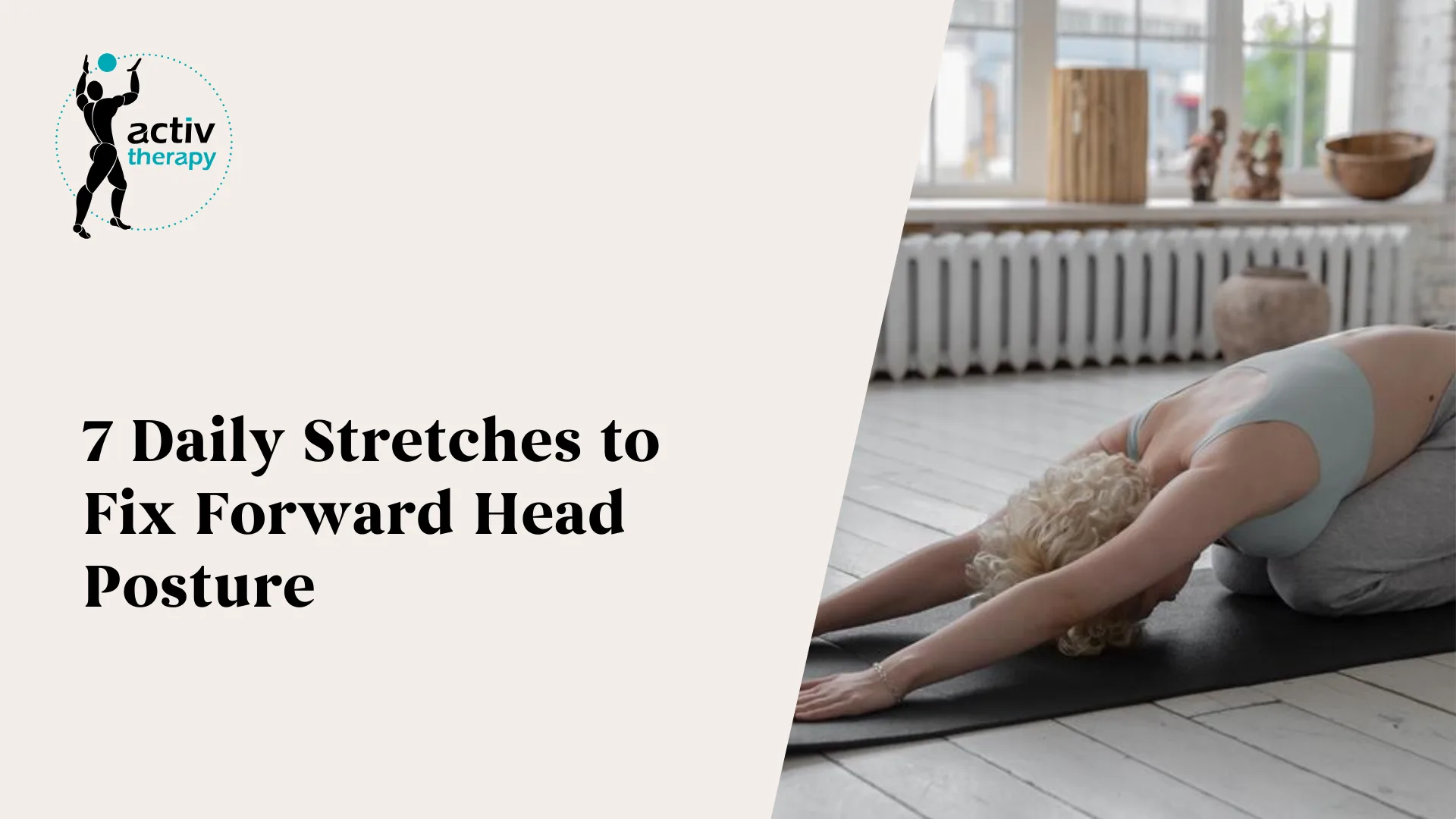
Forward head posture has become one of the most common postural problems in the digital age, affecting people who spend hours hunched over computers, phones, and tablets. This condition occurs when your head shifts forward beyond your shoulders, placing up to 27 kilograms of extra stress on your cervical spine. The consequences extend beyond appearance—chronic neck pain, tension headaches, reduced lung capacity, and accelerated spinal degeneration are all well-documented outcomes.
The encouraging news is that forward head posture can be corrected through consistent practice of specific exercises. These movements target the weakened deep neck flexors and overstretched upper back muscles that contribute to poor alignment. The following seven exercises, when performed daily, address the root causes of forward neck posture and help restore natural cervical alignment.
Understanding Forward Head Posture and Its Impact
Before diving into correction exercises, it's essential to understand what causes forward head posture. Prolonged sitting, repetitive movements, and poor ergonomics create muscle imbalances where certain muscles become tight whilst others weaken. The deep neck flexors lose strength, the upper trapezius becomes overactive, and the thoracic spine stiffens into a rounded position.
These imbalances don't just affect appearance. For every 2.5 centimetres your head moves forward, you add approximately 4.5 kilograms of additional weight that your neck muscles must support. This mechanical stress leads to muscle fatigue, joint compression, and the chronic pain patterns many people experience. Understanding these mechanics helps explain why targeted exercises are so effective at reversing the condition.
Wall Angels for Upper Back Strength
Wall angels are one of the most effective exercises for strengthening the upper back muscles that support proper head alignment. This movement specifically targets the lower and middle trapezius, rhomboids, and posterior deltoids—muscles that become weak and stretched with forward head posture.
To perform wall angels correctly, stand with your back against a wall, feet roughly 10 centimetres away from the base. Flatten your lower back, head, and shoulders against the wall. Raise both arms to shoulder height with elbows bent at 90 degrees, maintaining contact with the wall throughout. Slowly slide your arms upward whilst keeping contact, then return to the starting position. This controlled movement helps retrain your body to maintain proper posture naturally.
Complete 10-15 repetitions, focusing on quality over quantity. Many people initially struggle to keep all contact points on the wall—this reveals the extent of muscle imbalance present. With regular practice, you'll notice improved upper back strength and find it easier to maintain proper posture during daily activities. Those experiencing difficulty with maintaining balance during exercises may benefit from structured balance training approaches that complement postural correction work.
Chin Tucks to Strengthen Deep Neck Flexors
The deep neck flexor muscles—particularly the longus colli and longus capitis—play a crucial role in maintaining correct neck alignment. These muscles become inhibited and weak with forward head posture, whilst superficial muscles like the sternocleidomastoid compensate and become overactive. Chin tucks directly address this imbalance by reactivating the deep stabilising muscles.
Begin by positioning your head in neutral, with eyes and jaw parallel to the ground. Gently draw your chin straight back, creating a "double chin" appearance without tilting your head up or down. You should feel the muscles at the front of your neck engage deeply, not the superficial muscles you can see or feel with your hand.
Hold this retracted position for 5-10 seconds, maintaining normal breathing throughout. Perform 10-15 repetitions, several times throughout the day. The key is precision rather than force—aggressive movements recruit the wrong muscles and reduce effectiveness. As these deep stabilisers strengthen, they better support your head's weight and help maintain proper cervical alignment automatically. For those managing persistent neck tension alongside joint discomfort, comprehensive joint pain management strategies can provide additional relief.
Shoulder Blade Squeeze for Scapular Stability
Forward head posture often accompanies rounded shoulders and protracted shoulder blades. The shoulder blade squeeze exercise addresses this component by strengthening the rhomboid muscles and middle trapezius fibres that retract the scapulae. This creates a more stable foundation for proper head positioning.
Sit or stand with arms relaxed at your sides. Without shrugging your shoulders upward, squeeze your shoulder blades together as if trying to hold a pencil between them. Focus on the muscles between your shoulder blades doing the work, not your upper trapezius muscles near your neck. You should feel a contraction in your mid-back region, not tension rising into your neck.
Hold the squeeze for 5-10 seconds, then release slowly. Repeat 10-15 times, performing this exercise multiple times daily. The beauty of shoulder blade squeezes lies in their versatility—they can be done at your desk, in the car, or whilst watching television. As scapular stability improves, you'll notice reduced upper back fatigue and better natural positioning of your shoulders and head throughout the day.
Deep Neck Flexor Activation Exercise
Whilst chin tucks provide basic deep neck flexor strengthening, progressive activation exercises take this further. This advanced variation increases the challenge to these critical stabilising muscles, accelerating improvements in neck posture and control.
Lie on your back with knees bent and feet flat. Perform a gentle chin tuck, then slowly lift only your head approximately 2.5 centimetres off the surface whilst maintaining the tucked position. Your neck should remain in neutral—you're not performing a sit-up or curling your neck. Hold this position for 10 seconds, then lower slowly.
Start with 5-8 repetitions and gradually increase as strength develops. If you feel your superficial neck muscles bulging or straining, you're likely using incorrect technique. The movement should feel deep within the neck, with minimal visible muscle activity. This exercise specifically targets the endurance capacity of deep neck flexors, which research shows becomes significantly compromised in people with forward head posture. Regular practice rebuilds this endurance, allowing these muscles to support proper alignment throughout the day.
Upper Trapezius Release for Muscle Balance
The upper trapezius muscle frequently becomes overactive and tight with forward head posture, creating the sensation of tension across the tops of your shoulders and into your neck. Releasing this tightness is essential for restoring balanced muscle function and reducing discomfort.
Sit upright with good posture. Gently tilt your head to the right, bringing your right ear toward your right shoulder. Place your right hand on the left side of your head and apply very gentle pressure, increasing the stretch. Simultaneously, reach your left arm toward the floor, depressing the left shoulder. You should feel a stretch along the left side of your neck and top of your shoulder.
Hold this position for 30-60 seconds, breathing normally and allowing the muscles to release. Repeat on the opposite side, performing 2-3 stretches per side. This stretch is particularly beneficial after prolonged periods at a computer or following activities that aggravate neck tension. As upper trapezius tightness decreases, the muscle can function more normally rather than remaining in a constant state of overactivity.
Cervical Extension Range of Motion Exercise
Forward head posture typically restricts cervical extension—the ability to tilt your head backward comfortably. This limitation perpetuates poor posture patterns and contributes to neck stiffness. Gentle extension exercises help restore this important range of motion whilst strengthening the posterior neck muscles.
Sit or stand with proper posture, shoulders back and head in neutral. Slowly tilt your head backward, looking toward the ceiling whilst keeping your mouth closed. Move only as far as comfortable—this should create a gentle stretch sensation, not pain. Avoid jutting your chin forward; instead, think of the movement pivoting from the base of your skull.
Hold the extended position for 5-10 seconds, then return to neutral. Perform 8-10 repetitions, once or twice daily. Many people initially have limited extension range due to joint stiffness and muscle tightness. With consistent practice, this mobility typically improves, allowing for more natural head movements. Better cervical extension also helps counteract the constant forward positioning that occurs during screen time and reading. Similar to how joint mobility interventions benefit overall movement patterns, cervical mobility work directly supports postural improvement.
Thoracic Spine Rotation for Upper Back Mobility
The thoracic spine—your mid-back region—plays a crucial yet often overlooked role in head and neck posture. Stiffness in this area contributes to forward head positioning and limits your ability to maintain proper alignment. Thoracic rotation exercises address this mobility restriction whilst strengthening the muscles that support spinal extension.
Begin on hands and knees in a quadruped position, with hands directly under shoulders and knees under hips. Place your right hand behind your head with the elbow pointed outward. Keeping your left hand planted and hips stable, rotate your upper body to the right, lifting your right elbow toward the ceiling. Focus on the rotation coming from your mid-back, not your neck or lower back.
Rotate as far as comfortable, hold for 2-3 seconds, then return to the starting position. Perform 8-10 controlled repetitions on each side. This exercise not only improves thoracic mobility but also engages the core stabilisers and reinforces proper movement patterns. As thoracic rotation improves, you'll likely notice it becomes easier to sit upright and maintain good posture with less effort. The improved upper back mobility creates a more stable foundation for proper head positioning.
Creating Your Daily Routine for Postural Correction
Consistency proves more important than intensity when correcting forward head posture. These seven exercises form a comprehensive routine that addresses all the key components: strengthening weak muscles, stretching tight ones, and improving mobility in restricted areas. Ideally, perform the complete sequence once daily, preferably during a time you can commit to regularly.
Each full routine takes approximately 15-20 minutes to complete properly. If time constraints make this difficult, consider splitting the exercises into morning and evening sessions. The strengthening exercises (wall angels, chin tucks, shoulder blade squeezes, and deep neck flexor activation) work well in the morning to prepare your posture for the day ahead. The mobility and stretching exercises (upper trapezius release, cervical extension, and thoracic rotations) can be performed in the evening to address accumulated tension.
Track your progress by noting changes in how you feel and any improvements in your natural posture. Many people notice reduced neck tension within the first week, whilst structural changes in resting head position typically become apparent after 3-4 weeks of consistent practice. For additional support in improving overall mobility and preventing age-related postural decline, consider incorporating evidence-based mobility training principles into your broader wellness routine.
Complementary Strategies for Lasting Results
Whilst these exercises provide the foundation for correcting forward head posture, supporting strategies enhance their effectiveness. Ergonomic modifications to your workspace ensure you're not constantly fighting against poor positioning. Your computer monitor should be at eye level, directly in front of you, approximately an arm's length away. When using mobile devices, bring them up to eye level rather than dropping your head down.
Posture awareness throughout the day reinforces the improvements you're building through exercise. Set hourly reminders to check your position: Are your ears aligned over your shoulders? Is your chin level? Are your shoulders back? These brief posture checks help retrain your proprioception—your body's awareness of its position in space.
Consider taking regular movement breaks, especially during prolonged sitting. Every 30-45 minutes, stand up, perform a few shoulder rolls and chin tucks, and walk briefly. This prevents muscles from settling into poor posture patterns and maintains the improvements you're working to achieve. For individuals experiencing ongoing challenges with posture-related pain, comprehensive pain management approaches may provide additional relief alongside exercise interventions.
When to Seek Professional Assessment
Whilst these exercises benefit most people with forward head posture, certain situations warrant professional evaluation. If you experience persistent pain that doesn't improve with exercise, numbness or tingling in your arms or hands, frequent headaches, or dizziness, consult a physiotherapist or healthcare provider. These symptoms may indicate nerve compression or other conditions requiring specific treatment.
A physiotherapist can assess your individual posture patterns, identify specific muscle imbalances, and provide personalised exercise progressions. They may also use manual therapy techniques to address joint restrictions and muscle tightness more effectively than stretching alone. Professional guidance proves particularly valuable if you've had longstanding postural issues or have sustained previous neck injuries.
Professional assessment becomes especially important for older adults, as age-related changes in bone density, joint health, and muscle mass can complicate postural correction. Those in this demographic may benefit from specialised safety modifications alongside their exercise program to prevent falls and other complications whilst improving posture.
Maintaining Your Improvements Long-Term
Correcting forward head posture requires patience and consistency, but maintaining those improvements demands ongoing attention. Once you've achieved better alignment, continue performing a maintenance routine of 2-3 sessions per week. This prevents the gradual return of poor posture patterns and keeps the supporting muscles strong.
Building movement variety into your routine also supports long-term postural health. Activities like swimming, yoga, and Pilates naturally reinforce proper alignment and strengthen postural muscles through functional movement patterns. Choose activities you enjoy, as you're more likely to maintain them consistently over time.
Remember that perfect posture isn't about rigidity—it's about balanced alignment that allows efficient movement without excessive strain. Your head should rest comfortably over your shoulders, supported by strong, balanced muscles that work automatically without constant conscious effort. With dedicated practice of these seven exercises and attention to daily habits, you can correct forward head posture and enjoy the reduced pain, improved appearance, and better overall function that comes with proper alignment.
Ready to Get Help?
Book an appointment with one of our experienced Physiotherapy professionals across South West Sydney.
Book an AppointmentMedical Disclaimer
This article is intended for general informational and educational purposes only. It does not constitute medical advice and is not a substitute for professional diagnosis, treatment, or advice from a qualified healthcare provider. Always consult a registered physiotherapist, chiropractor, or other appropriate healthcare professional before starting any new treatment or exercise programme.