 (02) 9726 4491
After Knee Replacement: 7 Critical Exercises for Recovery

Clinically reviewed by Matthew Calabrese, Physiotherapist · Australian Health Practitioner Regulation Agency (AHPRA). This article is general information, not a substitute for an individual assessment.

Recovery after knee replacement surgery depends heavily on the right exercises performed at the right time. Following a structured program of after knee replacement exercises can significantly reduce recovery time, improve mobility, and help you return to daily activities with confidence. While surgery addresses the damaged joint, rehabilitation determines your long-term outcome and quality of life.
The exercises outlined in this guide are based on evidence-based physiotherapy protocols and are designed to progress safely through your recovery stages. Whether you're preparing for surgery or already in the rehabilitation phase, understanding which exercises to perform and when can make the difference between a good recovery and a great one.
Understanding Your Total Knee Replacement Rehab Timeline
Total knee replacement recovery typically unfolds in distinct phases, each with specific goals and exercise requirements. The first two weeks focus on reducing swelling, managing pain, and regaining basic movement. Weeks three to six emphasise building strength and increasing range of motion. From six weeks onwards, you'll work on advanced strengthening and functional movements that prepare you for normal activities.
Your physiotherapist will assess your progress regularly and adjust your program accordingly. Some patients advance more quickly than others, and that's perfectly normal. The key is consistency and proper technique rather than rushing through stages. Just as proper breathing techniques support recovery in other post-operative situations, controlled breathing during knee exercises helps manage discomfort and improves performance.
After Knee Replacement Exercises: The Critical Seven
1. Ankle Pumps
Begin this exercise immediately after surgery to prevent blood clots and reduce swelling. While lying down or seated, slowly flex your foot up towards your shin, then point your toes downward. Perform 10-15 repetitions every hour while awake. This simple movement activates your calf muscles and promotes circulation throughout your leg, which is crucial in the early post-operative period.
2. Quadriceps Sets
Strengthening your quadriceps is fundamental to knee replacement recovery exercises. Lie on your back with your leg straight. Tighten the muscle on the front of your thigh by pushing the back of your knee down into the bed or floor. Hold for 5-10 seconds, then relax. Perform 10 repetitions three times daily. This exercise can begin within 24 hours of surgery and continues throughout your rehabilitation.
3. Heel Slides
This post knee replacement exercise improves your knee's bending ability. Lying on your back, slowly slide your heel towards your buttocks, bending your knee as far as comfortable. Hold for 5 seconds, then slide your heel back down. Perform 10 repetitions two to three times daily. You can place a towel under your heel to reduce friction and make the movement smoother.
4. Straight Leg Raises
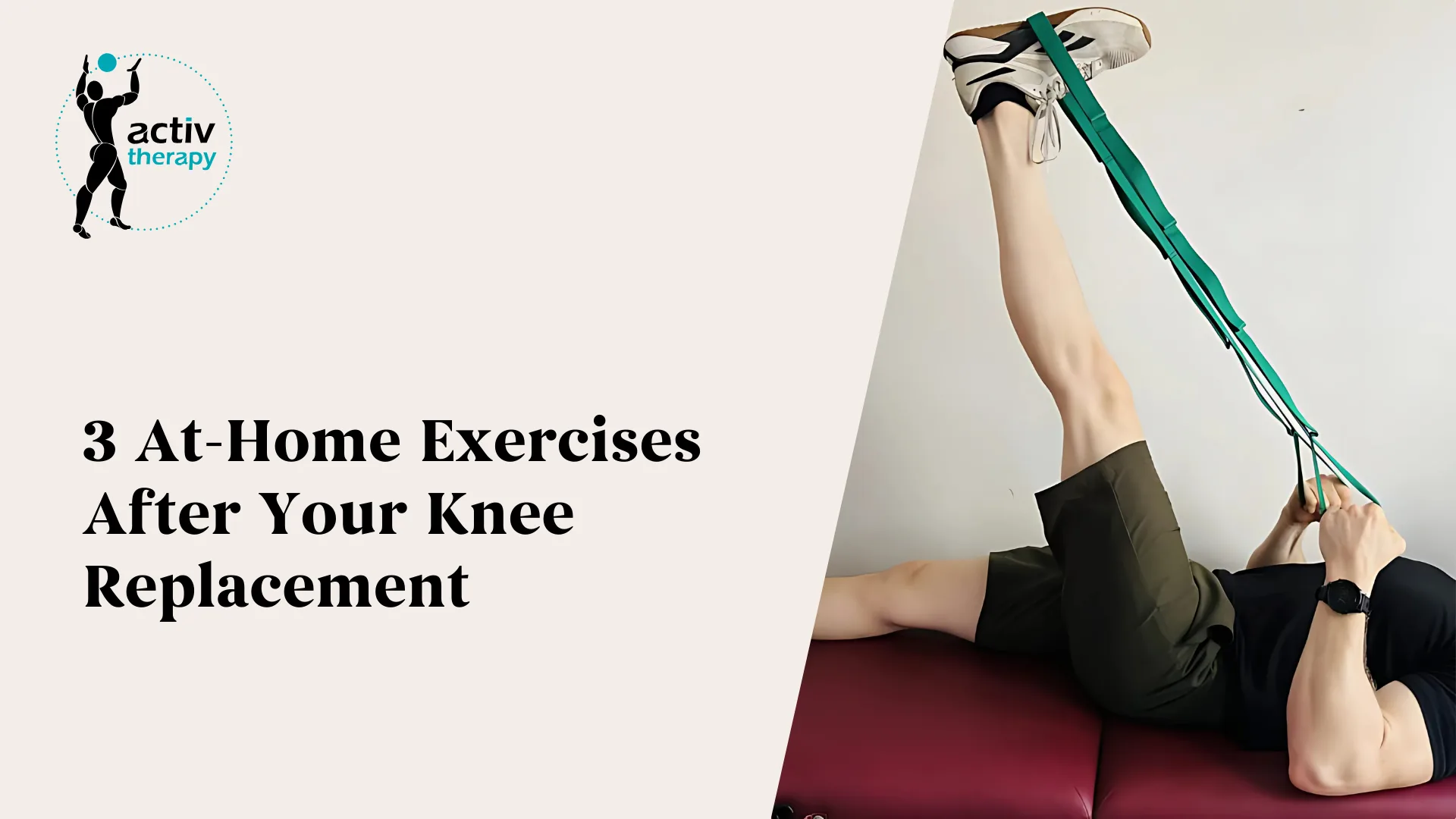
Once you can perform quadriceps sets effectively, progress to straight leg raises. Lie on your back with one knee bent and the operated leg straight. Tighten your thigh muscle and lift your straight leg about 30 centimetres off the surface. Hold for 5 seconds, then slowly lower. Complete 10 repetitions twice daily. This TKR exercise builds the strength needed for walking and stair climbing.
5. Seated Knee Extensions
Sit in a firm chair with your feet flat on the floor. Slowly straighten your operated knee, lifting your foot off the ground. Hold for 5 seconds at the top, then lower slowly. Perform 10 repetitions three times daily. As you progress, you can add ankle weights to increase resistance. This exercise directly targets the quadriceps muscles essential for standing and walking stability, similar to principles used in balance training programs.
6. Standing Knee Flexion
Hold onto a stable surface for support. Slowly bend your operated knee, bringing your heel towards your buttocks. Hold for 5 seconds, then slowly lower your foot back to the floor. Perform 10 repetitions twice daily. This knee surgery exercise improves the bending range of motion needed for activities like climbing stairs and getting in and out of cars.
7. Mini Squats
Stand facing a counter or stable surface, holding on for balance. With feet shoulder-width apart, slowly bend both knees about 45 degrees, as if sitting back into a chair. Keep your back straight and knees aligned over your toes. Hold for 5 seconds, then slowly return to standing. Start with 5 repetitions twice daily, gradually increasing to 10 repetitions. This functional exercise strengthens multiple muscle groups and prepares you for daily activities.
Supporting Your Recovery Beyond Exercise
While exercises form the core of your rehabilitation, several complementary strategies enhance recovery outcomes. Soft tissue manipulation techniques can help reduce scar tissue formation and improve tissue mobility around your new joint. Your physiotherapist may incorporate these techniques during treatment sessions.
Breathing exercises play a surprisingly important role in post-surgical recovery. Deep breathing helps prevent respiratory complications, reduces stress, and can assist with pain management. Proper breathing techniques ensure adequate oxygen delivery to healing tissues and support your overall recovery process.
Safety Considerations and Home Modifications
Creating a safe environment reduces fall risk during recovery when balance and strength are temporarily compromised. Remove loose rugs, secure electrical cords, and ensure adequate lighting throughout your home. Consider installing grab bars in the bathroom and using a raised toilet seat to minimise stress on your new knee.
Many patients benefit from proper mobility aid training to ensure safe movement during early recovery stages. Whether using a walker, crutches, or a cane, correct technique prevents additional strain and supports proper healing. Your physiotherapist will guide you on when to transition between different aids as your strength improves.
When to Progress and When to Seek Help
Progress in total knee replacement rehab should be gradual and pain-informed. Mild discomfort during exercises is normal, but sharp pain or significant swelling indicates you may be pushing too hard. Always follow your surgeon's and physiotherapist's guidance regarding weight-bearing restrictions and exercise progression.
Contact your healthcare provider immediately if you experience sudden increases in pain, warmth or redness around the incision, fever, or chest pain. These symptoms require prompt medical evaluation. Regular follow-up appointments allow your treatment team to monitor your progress and adjust your rehabilitation program as needed.
Maximising Long-Term Success
The exercises you perform in the first twelve weeks establish the foundation for long-term knee function, but rehabilitation doesn't end there. Many patients continue modified versions of these exercises indefinitely to maintain strength and flexibility. As you progress, advanced recovery protocols can help you achieve optimal outcomes and return to activities you enjoy.
Consistency matters more than intensity, especially in the early stages. Performing your exercises correctly three times daily yields better results than occasional intensive sessions. Keep a log of your exercises, noting any pain levels or difficulties, to share with your physiotherapist during appointments. This information helps them fine-tune your program for optimal recovery.
Your commitment to rehabilitation directly influences your surgical outcome. By following this structured approach to post knee replacement exercises and working closely with your physiotherapy team, you're investing in years of improved mobility and quality of life. Start where you are, progress at your own pace, and trust the process—your new knee and your future self will thank you.
Ready to Get Help?
Book an appointment with one of our experienced Physiotherapy professionals across South West Sydney.
Book an AppointmentMedical Disclaimer
This article is intended for general informational and educational purposes only. It does not constitute medical advice and is not a substitute for professional diagnosis, treatment, or advice from a qualified healthcare provider. Always consult a registered physiotherapist, chiropractor, or other appropriate healthcare professional before starting any new treatment or exercise programme.