 (02) 9726 4491
3 At-Home Exercises After Your Knee Replacement
Clinically reviewed by Matthew Calabrese, Physiotherapist · Australian Health Practitioner Regulation Agency (AHPRA). This article is general information, not a substitute for an individual assessment.
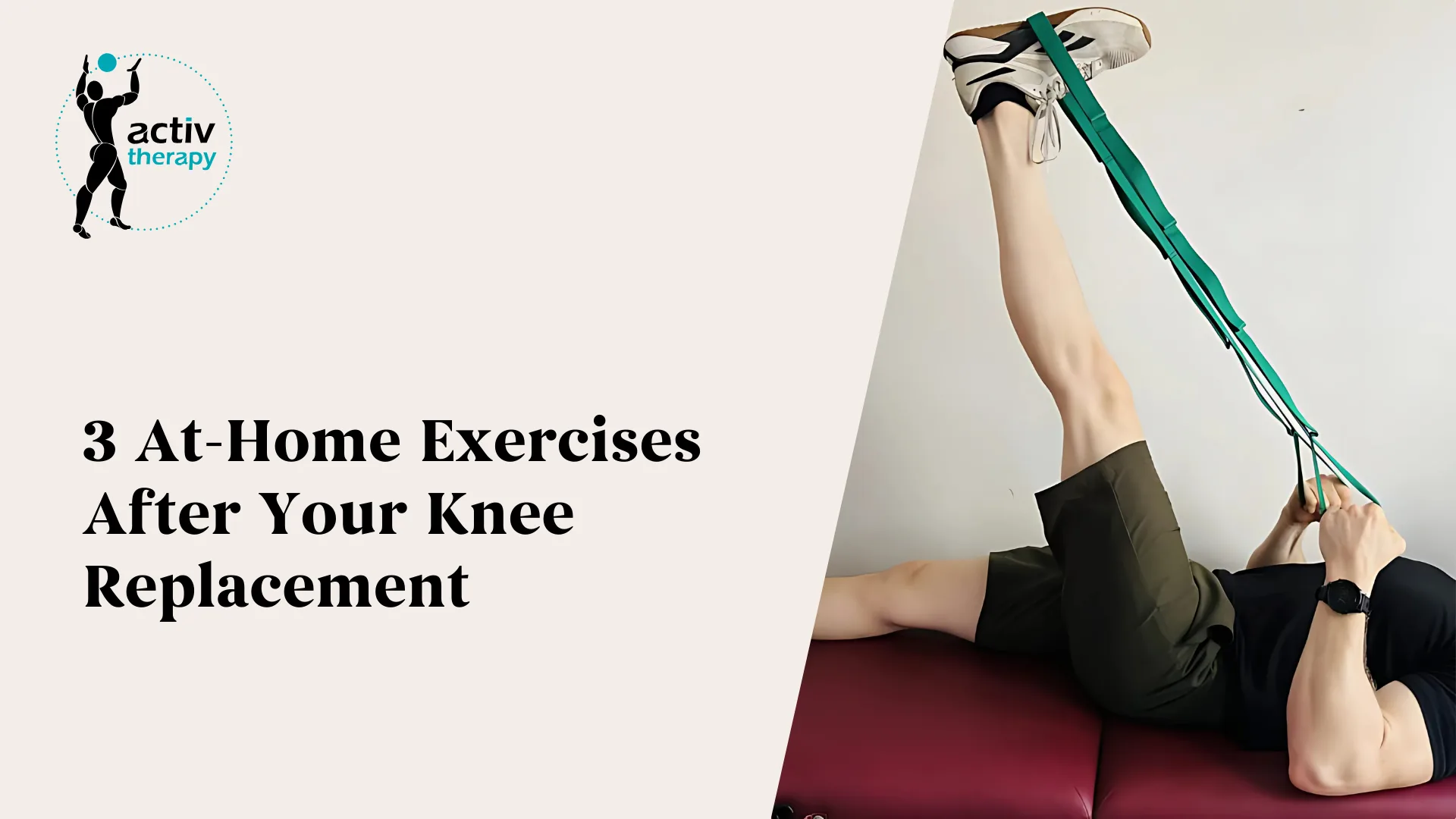
Recovering from knee replacement surgery requires dedication and a structured approach to rehabilitation. While professional physiotherapy plays a pivotal role, the exercises you perform at home can profoundly influence your recovery trajectory. Many patients feel uncertain about which movements are safe and effective during the initial weeks after surgery. Understanding and correctly executing three fundamental at-home exercises can make the difference between a challenging recovery and one that progresses smoothly toward restored mobility and independence. Let's explore these essential movements that will help you regain confidence in your new joint.
Essential Strengthening Exercises
The fifth essential movement, assisted knee bends, provides a controlled method to increase knee flexion. Using a towel to apply gentle pressure, this exercise helps improve range of motion while building strength in a supported manner.
Each of these exercises should be performed according to the prescribed repetitions and duration, typically holding positions for 5-10 seconds. Recovery from knee replacement surgery depends considerably on consistent practice of these fundamental strengthening movements. For optimal results, consider working with experts who deliver hands-on physiotherapy techniques to ensure proper form and lasting recovery outcomes.
Walking and Balance Training
Following a foundation of strengthening exercises, walking and balance training form the next key phase of knee replacement recovery. This stage focuses on restoring normal mobility and stability through progressive walking techniques and specialised balance exercises. Initially, patients begin with an assistive device, such as a walker or crutches, while gradually increasing weight-bearing on the surgical leg as directed by physio guidelines.
A critical component of walking rehabilitation is maintaining proper form. Patients should practise walking with their knee straight, engaging quad strength while moving heel-to-toe. This technique helps reinforce proper gait mechanics and prevents compensatory movement patterns. As stability improves, patients can advance to more challenging exercises, such as standing with one leg straight while holding onto a chair for support.
Balance training becomes increasingly important as walking ability progresses. Simple exercises, like attempting to sit in a chair slowly or standing on one leg while keeping the ankle stable, help improve proprioception and coordination. Patients can gradually advance to walking in a straight line without assistance, focusing on maintaining their leg straight throughout the movement. As confidence builds, incorporating varied walking surfaces and more complex balance challenges helps optimise recovery from Knee Replacement Exercise routines.
The progression from assisted to unassisted walking should be gradual and guided by comfort level and physio recommendations. The ultimate goal is to achieve a smooth, natural gait pattern without limping, indicating successful rehabilitation of the surgical leg. For optimal results, patients can complement their recovery with Activ 4 Life classes designed specifically for chronic injury rehabilitation.
Range of Motion Exercises
Restoring full knee mobility after replacement surgery depends heavily on consistent range of motion exercises. These exercises are specifically designed to help patients regain both flexion (ability to bend) and extension (ability to straighten) of the knee joint, which are essential components of a successful recovery. Working with a physiotherapist, patients learn proper techniques for exercises that target different aspects of knee motion.
Key exercises include heel slides, where patients lie on their back and slide their foot towards their thigh, gradually increasing the knee bend. Short arc quad exercises strengthen the muscles while improving extension, and seated knee bends focus on controlled flexion of the joint. These movements, when performed correctly, help restore natural motion patterns while minimising discomfort.
For ideal results, patients should perform these exercises 2-3 times daily, following their physiotherapist's specific instructions. Proper form is indispensable - rushing through exercises or using incorrect technique can impede progress and potentially cause complications. As recovery progresses, the range of motion typically increases gradually, allowing for more extensive movement over time.
Each exercise session should focus on both bending and straightening the knee, ensuring balanced development of mobility. Patients should pay careful attention to any guidance from their physiotherapist regarding modifications or progression of exercises. This structured approach to range of motion exercises, combined with consistent practice, provides the foundation for regaining functional knee mobility after replacement surgery. The expert physiotherapy team at Activ Therapy specialises in targeting muscles, joints, ligaments, and tendons to ensure optimal recovery outcomes.
Conclusion
Post-knee replacement rehabilitation exercises performed at home serve as essential components of successful recovery. Proper execution of strengthening movements, walking exercises, and range-of-motion activities contributes to improved mobility and function. Regular practice of controlled knee bends, heel slides, and balance training helps patients achieve ideal outcomes. When combined with professional guidance, these fundamental exercises support the development of normalised gait patterns and enhanced joint stability.
Ready to Get Help?
Book an appointment with one of our experienced Physiotherapy professionals across South West Sydney.
Book an AppointmentMedical Disclaimer
This article is intended for general informational and educational purposes only. It does not constitute medical advice and is not a substitute for professional diagnosis, treatment, or advice from a qualified healthcare provider. Always consult a registered physiotherapist, chiropractor, or other appropriate healthcare professional before starting any new treatment or exercise programme.