 (02) 9726 4491
Vestibular Exercises: 7 Balance Movements for Vertigo

Clinically reviewed by Matthew Calabrese, Physiotherapist · Australian Health Practitioner Regulation Agency (AHPRA). This article is general information, not a substitute for an individual assessment.

Living with vertigo can feel disorienting and frightening, but targeted vestibular exercises offer a proven path to recovery. Whether you're experiencing sudden room-spinning sensations or persistent unsteadiness, these therapeutic movements help retrain the connection between your inner ear and brain. Research shows that consistent practice of these balance exercises for dizziness can significantly reduce symptoms and improve quality of life within weeks.
The vestibular system, located in your inner ear, works constantly to maintain balance and spatial orientation. When this system becomes disrupted through conditions like benign paroxysmal positional vertigo, vestibular neuritis, or age-related changes, the result is often debilitating dizziness and balance problems. The good news is that your brain has remarkable plasticity and can adapt through specific vestibular therapy exercises.
Understanding How Vestibular Exercises Work
Vestibular exercises function through a process called vestibular adaptation and compensation. When you perform these movements repeatedly, your brain learns to rely more heavily on visual and proprioceptive cues to maintain balance, effectively compensating for inner ear dysfunction. This neuroplastic response doesn't happen overnight, but with consistent practice, most people experience significant improvement.
These inner ear exercises work differently from standard balance training. Rather than simply strengthening muscles, they specifically challenge and retrain the vestibular system itself. This targeted approach makes them particularly effective for conditions stemming from inner ear problems. For comprehensive foundational knowledge about this approach, our guide on vestibular rehabilitation provides essential context for beginning your recovery journey.
Seven Essential Vestibular Exercises for Vertigo Relief
1. Gaze Stabilization Exercise
This fundamental movement trains your eyes to stay focused while your head moves, reducing the disorienting sensation that accompanies head motion. Hold a target like your thumb at arm's length in front of you. Keep your eyes locked on the target while slowly turning your head side to side. Perform 20 repetitions, then repeat with up-and-down head movements. Start slowly and increase speed as tolerance improves.
2. Brandt-Daroff Exercises
These BPPV exercises specifically target positional vertigo by moving calcium crystals in your inner ear back to their proper location. Sit upright on the edge of your bed, then quickly lie down on one side with your nose pointed upward at a 45-degree angle. Hold this position for 30 seconds or until dizziness subsides, then return to sitting. Repeat on the opposite side. Perform this sequence five times, twice daily.
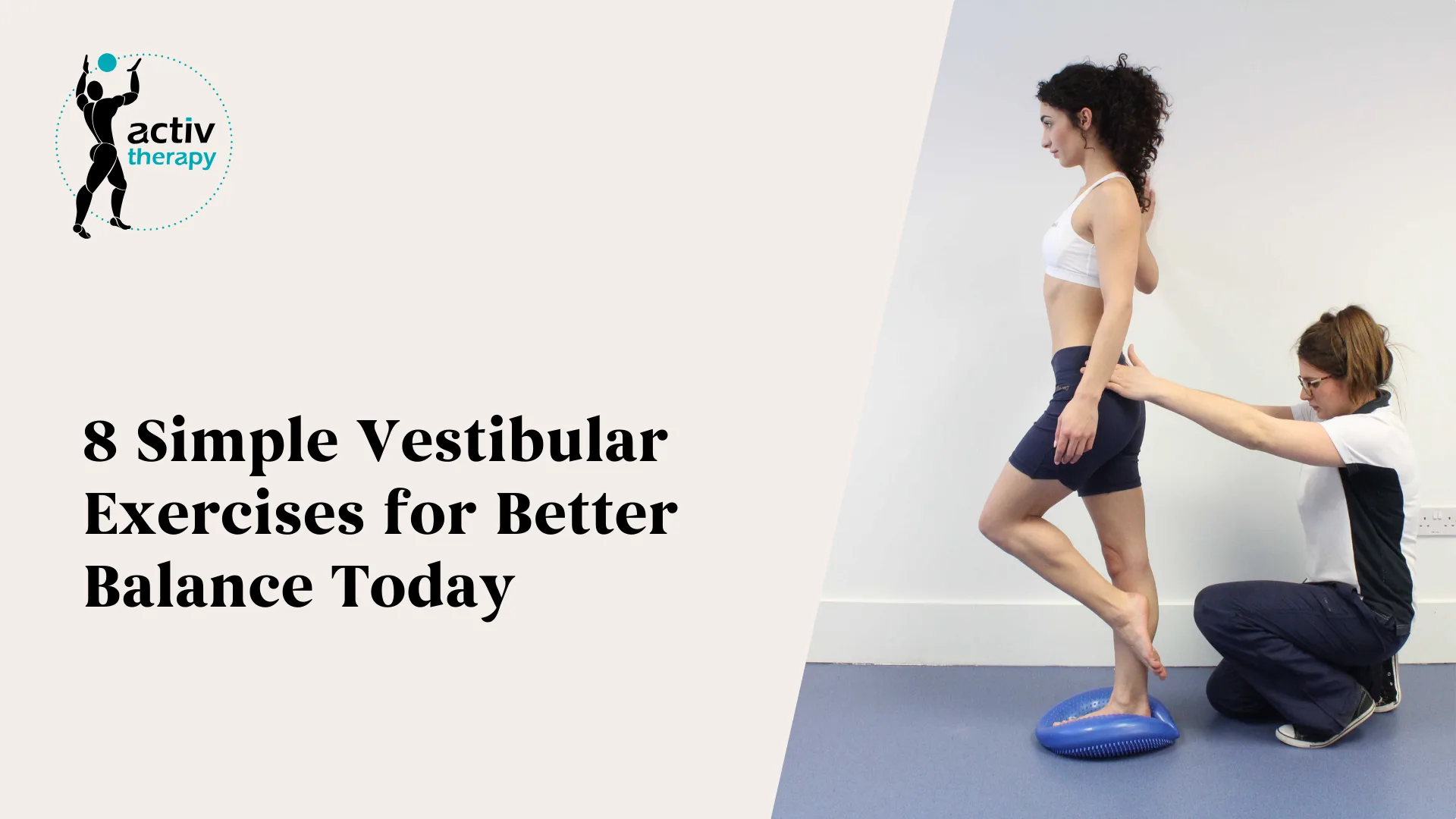
3. Single Leg Stance with Head Turns
This progressive balance exercise combines static balance challenges with vestibular stimulation. Stand near a wall for safety support, then lift one foot off the ground. Once stable, slowly turn your head left and right while maintaining your balance. Hold the position for 30 seconds, working up to one minute. This exercise complements the strategies outlined in our balance training tips, which provide additional fall prevention techniques.
4. Habituation Exercises
These vertigo exercises deliberately trigger mild symptoms to help your brain adapt. Sit upright, then quickly lie flat on your back and immediately return to sitting. Repeat this motion 10 times. While initially uncomfortable, these movements teach your vestibular system to respond more appropriately to position changes. Only perform these under guidance from a qualified physiotherapist initially.
5. Walking with Head Movements
This functional exercise translates vestibular training into real-world situations. Walk in a straight line down a hallway while turning your head side to side, keeping your eyes focused on a target at the end of the hallway. Start with 10 meters and gradually increase distance as your confidence improves. This movement pattern directly addresses the challenges many people face during daily activities.
6. Ball Toss While Standing
This dynamic exercise challenges your vestibular system while incorporating hand-eye coordination. Stand with feet shoulder-width apart and toss a small ball from hand to hand while maintaining your balance. Progress by narrowing your stance, standing on foam, or closing your eyes briefly. This exercise type is also featured in our home balance exercises for comprehensive fall prevention.
7. Epley Maneuver
The Epley maneuver is the gold standard treatment for posterior canal BPPV, the most common form of positional vertigo. This series of specific head and body positions guides displaced calcium crystals back to their proper location in the inner ear. Due to its complexity and the intense but temporary dizziness it can cause, this exercise should first be performed with a trained physiotherapist who can ensure correct technique and safety.
Creating Your Vestibular Exercise Routine
Consistency matters more than intensity when performing vestibular therapy exercises. Start with exercises that produce only mild symptoms and perform them twice daily. Most people benefit from 10-15 minutes of practice per session. As your tolerance improves, gradually increase difficulty by adding head movements, reducing visual input, or changing support surfaces.
Keep a symptom diary to track your progress. Note which exercises trigger symptoms, their severity, and how quickly symptoms resolve. This information helps you and your physiotherapist adjust your program appropriately. Remember that some dizziness during exercises is normal and actually necessary for adaptation to occur, but severe symptoms that persist should prompt consultation with your healthcare provider.
When to Seek Professional Guidance
While these vestibular exercises are generally safe, certain situations require professional assessment before beginning. If you experience new or worsening symptoms, severe headaches, vision changes, or hearing loss alongside your vertigo, consult a healthcare provider immediately. A physiotherapist specializing in vestibular rehabilitation can perform specific diagnostic tests to identify the exact cause of your symptoms and create a personalized treatment plan.
Professional guidance becomes particularly important for complex cases involving multiple vestibular conditions or when self-directed exercises aren't producing improvement after four weeks. Your physiotherapist can also incorporate complementary treatments like soft tissue manipulation to address secondary issues like neck tension that often accompanies vestibular disorders.
Maximizing Your Recovery
Beyond performing the exercises themselves, several strategies can enhance your vestibular rehabilitation outcomes. Stay well-hydrated, as dehydration can worsen dizziness symptoms. Ensure adequate sleep, since the brain's adaptation processes occur primarily during rest. Avoid prolonged periods of stillness, as keeping active encourages vestibular compensation even outside formal exercise sessions.
Consider integrating breathing techniques to manage anxiety that often accompanies vertigo. Our article on breathing exercises offers valuable techniques for staying calm during symptomatic episodes. Managing stress and anxiety is crucial, as these emotional states can amplify vestibular symptoms and slow recovery progress.
Most people who consistently practice vestibular exercises experience noticeable improvement within three to six weeks, with continued gains over several months. The investment in daily practice pays dividends through reduced symptoms, improved confidence in movement, and return to normal activities. Remember that vestibular recovery is not always linear—occasional setbacks are normal and don't indicate treatment failure.
Your vestibular system has remarkable capacity for adaptation when given the right stimulus through targeted exercises. By incorporating these seven movements into your daily routine and maintaining consistency, you're giving your brain the tools it needs to compensate for inner ear dysfunction and restore your sense of balance and stability.
Ready to Get Help?
Book an appointment with one of our experienced Physiotherapy professionals across South West Sydney.
Book an AppointmentMedical Disclaimer
This article is intended for general informational and educational purposes only. It does not constitute medical advice and is not a substitute for professional diagnosis, treatment, or advice from a qualified healthcare provider. Always consult a registered physiotherapist, chiropractor, or other appropriate healthcare professional before starting any new treatment or exercise programme.