 (02) 9726 4491
10 Best Core Exercises for Herniated Disc Recovery

Clinically reviewed by Matthew Calabrese, Physiotherapist · Australian Health Practitioner Regulation Agency (AHPRA). This article is general information, not a substitute for an individual assessment.
A herniated disc can severely impact daily life, but specific core strengthening exercises remain one of the most effective paths to recovery. While many worry that exercise might worsen their condition, targeted core movements—when executed correctly—can accelerate healing and prevent future injuries. Understanding which exercises provide therapeutic benefits whilst avoiding unnecessary strain is essential for successful rehabilitation.
The following evidence-based core strengthening techniques offer a balanced approach to rebuilding spinal stability and reducing pain. These 10 physiotherapist-approved exercises have been specifically selected for their safety profile and effectiveness in supporting herniated disc recovery without aggravating symptoms.
Understanding Herniated Disc Mechanics and Core Stability
A herniated disc occurs when the soft, gel-like nucleus of an intervertebral disc pushes through its tough outer ring, potentially compressing nearby nerves and causing significant pain. This displacement most frequently affects the lower back (lumbar spine), though cervical disc herniation can also occur in the neck region.
When disc material protrudes and contacts nerve roots, patients typically experience localised back pain along with radiating symptoms such as numbness, tingling, or weakness in the affected limb. Understanding these mechanics is vital before beginning any exercise programme, as the wrong movements can aggravate the condition whilst appropriate core exercises facilitate healing.
The relationship between core strengthening exercises and herniated disc recovery is rooted in biomechanics. A strong core provides essential support to the spine, helping maintain proper alignment and reduce pressure on the affected disc. The deep core muscles, particularly the transverse abdominis and multifidus, act as a natural brace that stabilises the spine during movement and at rest.
Age-related disc degeneration makes older adults more susceptible to disc herniation, but younger individuals can also develop this condition through acute injury or repetitive strain. Working with experienced physiotherapists ensures that exercises for herniated disc are tailored to your specific condition, whether dealing with a bulging disc or more severe herniation.
Safe Core Training Principles for Disc Recovery
With a clear understanding of herniated disc mechanics established, implementing proper core training principles becomes the foundation for successful rehabilitation. When dealing with a herniated disc, the primary focus should be strengthening core muscles whilst maintaining spinal stability and avoiding movements that could exacerbate the condition.
The key to safe core training lies in emphasising controlled movements and isometric exercises that target deep stabilising muscles. Core exercises with herniated disc should avoid excessive spinal flexion, which can increase pressure on the injured disc. Instead, focus on movements maintaining a neutral spine position while engaging core muscles through stabilisation.
Progressive strengthening is essential for optimal recovery. Begin with basic isometric holds and gradually advance to more challenging ab exercises for herniated disc as symptoms improve and healing progresses. The lower back should remain protected throughout all movements, with emphasis on maintaining proper form rather than rushing through repetitions or increasing intensity too quickly.
Working with a qualified physiotherapist is imperative for developing an individualised core strengthening programme that addresses specific limitations and recovery goals. Much like soft tissue manipulation techniques, core exercises must be applied with precision and clinical expertise to achieve optimal therapeutic outcomes.
1. Abdominal Draw-In Manoeuvre
The abdominal draw-in manoeuvre ranks as one of the most fundamental core exercises for herniated disc recovery. This gentle yet effective technique specifically targets the transverse abdominis, rectus abdominis, internal obliques, and external obliques, which play pivotal roles in spine stabilisation and pressure relief.
The exercise begins with a slow, controlled inhalation, followed by deliberate exhalation whilst drawing the navel towards the spine. This movement pattern activates deep core musculature, creating a natural protective mechanism that helps reduce pressure on the herniated disc. Proper form during execution is paramount, as incorrect technique could potentially exacerbate existing symptoms.
For optimal results, perform the abdominal draw-in manoeuvre in sets of 10-15 repetitions, two to three times daily. This frequency allows consistent engagement of core stabilising muscles without overexertion. When performed correctly, this exercise creates a foundation for more advanced core strengthening whilst providing immediate relief from disc-related discomfort.
The success of this exercise lies in its simplicity and effectiveness in engaging multiple layers of abdominal musculature simultaneously. This comprehensive activation pattern strengthens the core's natural bracing system, providing enhanced spinal support and stability throughout your recovery journey. The abdominal draw-in can be performed lying down, sitting, or standing, making it one of the most versatile exercises for herniated disc management.
2. Modified Bird Dog Exercise
Building upon the foundation established by the abdominal draw-in manoeuvre, the modified bird dog exercise represents another valuable core exercise for bulging disc recovery. This exercise effectively strengthens core muscles whilst minimising the risk of aggravating herniated discs in the lower back. By focusing on controlled movements and proper spine alignment, you can safely build core stability without causing additional pain.
The modified bird dog involves a precise sequence of movements. Starting on hands and knees, maintain a neutral spine position whilst extending one arm forward and the opposite leg backward. This opposite limb coordination helps engage multiple core muscles simultaneously, promoting balanced strength development. Hold each position for 3-5 seconds, repeating continuously for 30-second intervals, performed three times.
What makes this exercise particularly suitable for herniated disc recovery is its emphasis on spine stabilisation. Unlike traditional core exercises that may cause excessive strain, the modified bird dog targets deep core muscles whilst maintaining proper back alignment. The controlled nature prevents sudden movements that could cause pain or further injury.
When performing this exercise, maintain proper form throughout each repetition, ensuring the back remains neutral and movements are executed with precision. This careful attention to technique allows you to strengthen your core effectively whilst supporting recovery. Begin with smaller ranges of motion and progress gradually as your tolerance improves.
3. Proper Plank Form and Progressions
Mastering proper plank form serves as a crucial element in herniated disc recovery, offering a low-impact way to strengthen core muscles whilst maintaining spinal stability. When performed correctly, this exercise creates a solid foundation for core strength without placing excessive stress on the spine, making it one of the safest back exercises for disc conditions.
To execute a proper plank, position your body to keep your back straight from head to heels. Place your forearms on the ground with shoulders stacked directly over elbows, maintaining shoulder-width distance between hands. Tighten abdominal muscles whilst keeping hips flat, avoiding any sagging or elevation that could compromise spinal alignment.
As you hold the plank position, engage lower pelvic muscles and work upper abdominal muscles simultaneously. Squeeze buttocks and thighs throughout the exercise to maintain proper form and prevent lower back strain. This full-body engagement ensures optimal distribution of muscle activation and reduces the risk of compensatory movements that could aggravate a herniated disc.
Remember to breathe normally during the exercise and avoid holding your breath, as this can increase intra-abdominal pressure and potentially strain the spine. Begin with 15-20 second holds and gradually progress to 60 seconds as strength improves, performing 2-3 sets with proper rest intervals. If you experience any discomfort or inability to maintain proper form, reduce the duration or modify the exercise by performing the plank from your knees.
4. Gentle Bridge Progressions
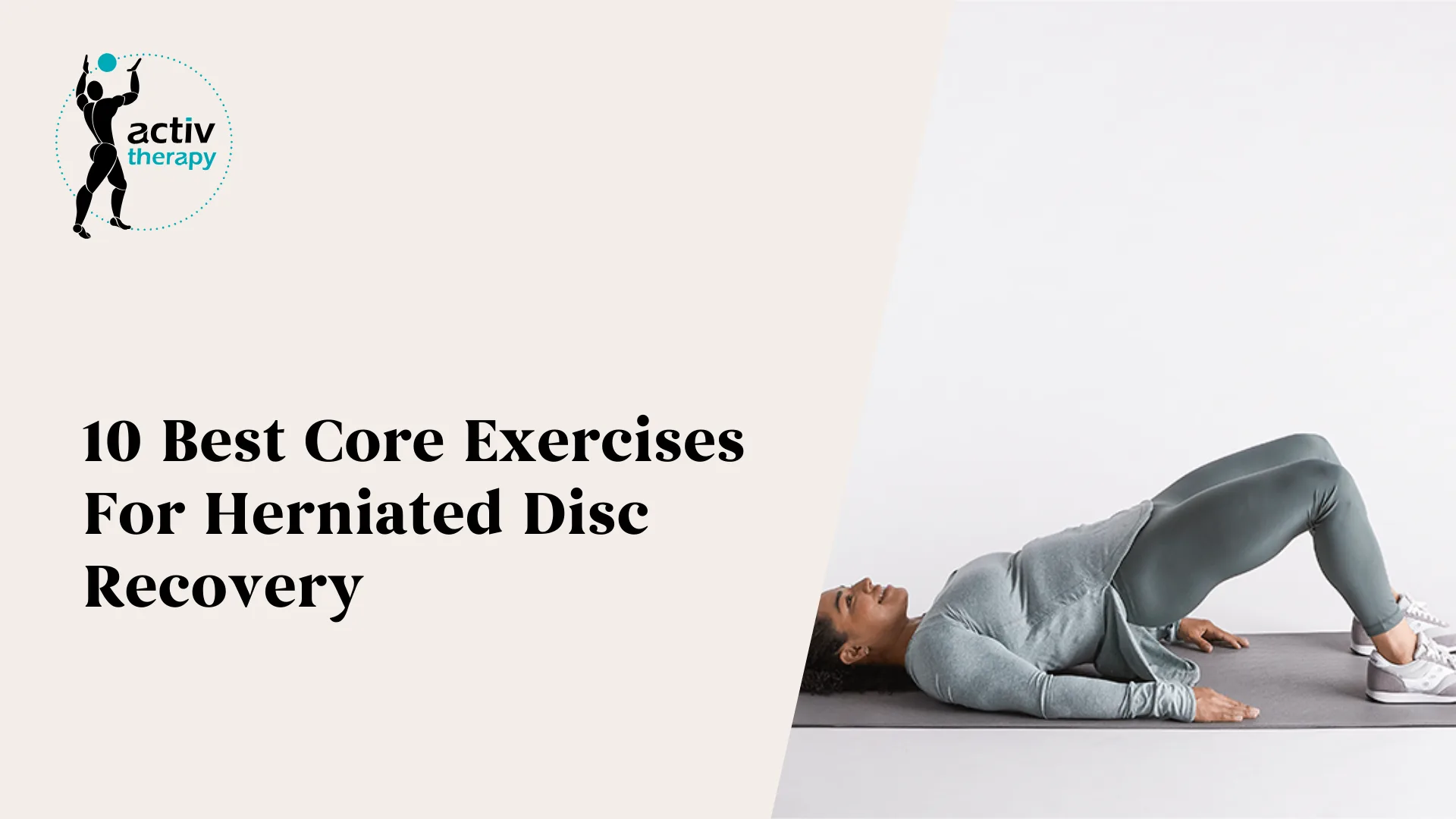
Through gentle bridge progressions, individuals recovering from a herniated disc can safely build core strength whilst maintaining proper spinal alignment. The bridge exercise serves as a vital component in herniated disc rehabilitation, offering a controlled method to strengthen the core and glutes without compromising spinal stability.
Beginning with basic glute bridges, press through your heels to elevate hips off the floor. This gentle exercise establishes a foundation for proper form whilst activating key muscle groups that support the spine. Focus on creating a straight line from shoulders to knees, engaging your core throughout the movement to protect your lower back.
As strength improves, you can advance to more challenging variations that promote enhanced stability and control. The single leg bridge represents a natural progression, demanding greater core engagement and balance. When performing this variation, maintaining a level pelvis is crucial to prevent unnecessary stress on bulging discs.
The glute bridge march offers another advancement, incorporating dynamic movement whilst sustaining the bridge position, further challenging core stability and coordination. For best results in herniated disc recovery, progress gradually through these gentle exercises. Start with shorter hold times in the basic bridge position (5-10 seconds), then slowly increase duration and difficulty as strength develops. Throughout all bridge variations, avoid excessive spinal flexion and immediately stop if pain occurs.
5. Cat-Cow Spinal Movement
The cat-cow spinal movement stands as another fundamental exercise in herniated disc rehabilitation, complementing the stability work developed through bridge exercises. This gentle, flowing movement addresses both symptoms and underlying causes of herniated disc conditions by creating space between vertebrae and promoting proper disc alignment.
Unlike more aggressive back exercises, cat-cow provides a controlled way to mobilise your lower back without excessive pressure on spinal nerve roots. For those suffering from herniation in the lower back, this exercise offers particular benefits by counteracting the effects of poor posture and repeated stress that can exacerbate herniated lumbar conditions.
To perform cat-cow, start on hands and knees with wrists directly under shoulders and knees under hips. As you inhale, arch your back by dropping your belly towards the floor and lifting your gaze upward (cow position). As you exhale, round your spine by tucking your chin to chest and drawing your navel towards your spine (cat position). The gentle shift between positions encourages disc material towards the centre, potentially alleviating pressure on affected nerves.
One significant advantage of cat-cow amongst core exercises for herniated disc is its versatility and safety. You can perform this movement multiple times throughout the day without risking overexertion. The gentle nature of these movements, combined with deep breathing similar to techniques used in breathing exercises for lung capacity, creates a therapeutic effect that supports overall recovery. Perform 10-15 slow, controlled repetitions, 2-3 times daily for optimal results.
6. Standing Extension Techniques
Standing extension techniques serve as powerful corrective movements for individuals recovering from herniated discs, particularly after long periods of sitting or flexion-based activities. This exercise helps reverse the effects of prolonged spinal flexion by guiding disc material back into a more neutral position, making it especially beneficial for those who spend considerable time at a desk.
To perform standing extension correctly, begin by standing with proper posture and placing your hands on your lower back towards the base of your spine. Push your pelvis forward whilst maintaining hand placement, creating a gentle backward arch. This movement should create mild tension without causing discomfort or pain radiating down the legs.
Extension movements allow disc material to move into a more favourable position, which can help relieve pressure on nerve roots. While lying prone extensions can provide similar benefits, standing extension offers the advantage of being easily performed throughout the day, especially during work breaks. This makes it one of the most practical exercises for herniated disc management in daily life.
Begin with 10 repetitions and perform 2-3 sets, adjusting the intensity based on your comfort level. A herniated disc doesn't always require aggressive treatment; sometimes, consistent, gentle extension movements can effectively manage symptoms and promote healing. Remember that standing extension should feel comfortable and never painful. If you experience any discomfort during the exercise, reduce the range of motion or consult a healthcare professional before continuing.
7. Spinal Decompression Methods
Effective spinal decompression plays a vital role in herniated disc recovery by creating much-needed space between vertebrae and relieving pressure on affected discs. This therapeutic approach utilises controlled stretching techniques that target the lower abdominal and deep core regions, promoting natural healing and pain relief for both bulging disc and herniated disc conditions.
The primary decompression method involves hanging from a bar or door frame for 20-30 seconds, performed in 2-3 sets. This technique allows gravity to create separation between vertebrae, reducing compression on the affected disc. Combined with extension exercises, particularly the Half Cobra and Full Cobra poses, these movements help encourage displaced disc material back toward its central position.
For comprehensive disc rehabilitation, the Cat-Cow exercise serves as an essential dynamic movement that opens intervertebral space whilst improving overall spinal mobility. This gentle, flowing motion helps maintain proper disc hydration and promotes healing. Additional therapeutic positions include the Seated Forward Fold, which lengthens the spine whilst decompressing vertebrae, and the Knee to Chest stretch, which targets specific spinal segments.
The Piriformis Stretch complements these decompression techniques by addressing related muscle tension that often accompanies herniated discs. When performed systematically, these core strengthening exercises work together to create optimal conditions for disc recovery. Execute these movements with proper form and progress gradually, allowing the body to adapt whilst maintaining the delicate balance between therapeutic benefit and potential strain.
8. Dead Bug Exercise for Core Stability
The dead bug exercise is an excellent core stabilisation movement for herniated disc recovery, as it strengthens deep abdominal muscles whilst keeping the spine in a safe, neutral position. This exercise challenges core control without requiring spinal flexion or rotation, making it one of the most effective ab exercises for herniated disc rehabilitation.
To perform the dead bug, lie on your back with arms extended straight above your shoulders and knees bent at 90 degrees with shins parallel to the floor. Press your lower back gently into the floor by engaging your core muscles. Slowly lower your right arm overhead whilst simultaneously straightening your left leg, hovering it just above the floor. Return to starting position and repeat on the opposite side.
The key to this exercise is maintaining constant contact between your lower back and the floor throughout the movement. This ensures your core muscles, rather than your hip flexors or back muscles, are doing the work. If your back arches away from the floor, you've extended too far—reduce your range of motion immediately to prevent aggravating your disc condition.
Begin with 8-10 repetitions per side, performing 2-3 sets. As strength improves, you can slow down the movement to increase time under tension, or add light ankle weights for progression. This exercise complements other core exercises for bulging disc by building the coordinated strength necessary to support your spine during daily activities and more complex movements.
9. Pelvic Tilts for Lower Back Relief
Pelvic tilts represent one of the gentlest yet most effective exercises for herniated disc recovery, particularly for those experiencing acute lower back pain. This fundamental movement helps restore proper pelvic alignment whilst gently engaging core muscles without placing excessive stress on the injured disc, making it an ideal starting point for those new to core strengthening exercises for herniated disc.
To perform pelvic tilts, lie on your back with knees bent and feet flat on the floor, hip-width apart. Begin by flattening your lower back against the floor by gently tilting your pelvis upward, as if tucking your tailbone under. You should feel your abdominal muscles engage and a gentle stretch in your lower back. Hold this position for 3-5 seconds, then release to neutral.
The beauty of pelvic tilts lies in their simplicity and safety. Unlike more dynamic exercises, this movement allows you to build core strength and improve spinal mobility with minimal risk of aggravating your herniated disc. The gentle rocking motion also promotes circulation to the affected area, which can aid in healing. Similar to approaches used in joint pain relief strategies, pelvic tilts address discomfort through controlled, therapeutic movement.
Perform 10-15 repetitions, 2-3 times daily. Focus on smooth, controlled movements rather than speed or intensity. As you progress, you can increase the hold time to 10 seconds per repetition. This exercise serves as an excellent warm-up before other core exercises and can be performed during pain flare-ups when more challenging movements aren't appropriate.
10. Wall Sits for Core and Lower Body Strength
Wall sits provide an isometric strengthening exercise that builds core stability and lower body strength whilst maintaining a safe, controlled spinal position. This exercise is particularly valuable for herniated disc recovery because it strengthens supporting muscles without requiring dynamic spinal movement that could aggravate the condition, making it one of the safest back exercises for disc rehabilitation.
To perform a wall sit, stand with your back against a wall and feet shoulder-width apart, positioned about 60cm from the wall. Slowly slide down the wall by bending your knees until your thighs are parallel to the floor (or as close as comfortable), as if sitting in an invisible chair. Your knees should be directly above your ankles, not extending past your toes, to maintain proper biomechanics.
Engage your core muscles by drawing your navel towards your spine and pressing your lower back gently into the wall. This core engagement is crucial—it's not just a leg exercise. Your entire core should be working to maintain the position and support your spine. Keep your shoulders relaxed and your chest lifted throughout the hold, maintaining the neutral spine position essential for all exercises for herniated disc.
Begin with 20-30 second holds and gradually progress to 60 seconds as strength improves. Perform 2-3 sets with 60-90 seconds rest between sets. If you experience any lower back pain, raise your position slightly or reduce the hold time. Wall sits complement other core strengthening exercises by building the lower body strength necessary to support proper posture and reduce strain on your spine during daily activities.
Core Exercise Safety Guidelines and Progressions
Proper adherence to safety guidelines remains paramount when performing core exercises for herniated disc recovery. When dealing with a herniated disc, especially in the lower back, it's essential to approach core strengthening exercises with caution and precision to prevent further injury and promote healing. Understanding when to push forward and when to pull back distinguishes successful rehabilitation from prolonged recovery.
The primary focus should be maintaining spinal stability throughout each exercise. Avoid movements involving excessive spinal flexion, as these can exacerbate the herniated disc condition and potentially worsen symptoms. Instead, concentrate on exercises that strengthen the core whilst keeping the spine in a neutral position. This approach helps protect the injured disc whilst building the necessary support structure around it.
Start with gentle, low-impact exercises and progress gradually based on tolerance levels. Monitor your body's response during each session, paying particular attention to any increase in back pain or radiating symptoms. If an exercise causes discomfort or aggravates existing pain, stop immediately and consult a healthcare provider for guidance. The principle of "hurt versus harm" applies here—mild discomfort during exercise may be acceptable, but sharp pain or neurological symptoms are not.
When performing core exercises with herniated disc, maintain proper form and breathing techniques to sustain optimal stability and protection of the spine. Focus on engaging deep core muscles without compromising spinal alignment. This includes exercises targeting both anterior and posterior core muscles whilst maintaining neutral spine positioning. Just as joint mobility treatments require individualised approaches, your exercise progression should be tailored to your specific condition and response.
When to Progress Your Exercise Programme
Knowing when to advance your core exercise programme is crucial for optimal herniated disc recovery. Progress should be based on objective improvements rather than arbitrary timeframes. Key indicators that you're ready to progress from basic ab exercises for herniated disc to more challenging variations include: consistent pain reduction over 2-3 weeks, ability to perform current exercises with proper form for the full prescribed duration, absence of pain during or after exercise sessions, and improved daily function.
When progressing exercises, increase only one variable at a time—either duration, repetitions, or difficulty level. For example, if you've been holding planks for 30 seconds comfortably, increase to 40-45 seconds before moving to a more challenging variation. This gradual approach allows your body to adapt safely without overwhelming healing tissues.
Warning signs that you're progressing too quickly include increased pain during or after exercises, new radiating symptoms down the leg, increased stiffness lasting more than 30 minutes after exercise, or difficulty maintaining proper form. If you experience any of these signs with your core exercises for bulging disc, scale back to your previous level and consult with a physiotherapist.
A typical progression timeline might look like this: weeks 1-2 focus on gentle exercises like pelvic tilts and abdominal draw-ins; weeks 3-4 introduce modified bird dog and bridges; weeks 5-6 add planks and dead bugs; and weeks 7-8 incorporate more challenging variations and longer hold times. However, individual recovery varies significantly, so use pain and function as your guide rather than strict timeframes when advancing through your core strengthening exercises for herniated disc programme.
Exercises to Avoid with Herniated Disc
Understanding which exercises to avoid is equally important as knowing which core exercises for herniated disc to perform. Certain movements can significantly increase pressure on the affected disc and potentially worsen your condition, delaying recovery or causing further damage to the spinal structures.
Avoid full sit-ups and crunches, as these create excessive spinal flexion that compresses the anterior portion of the disc, potentially forcing more nucleus material posteriorly where most herniations occur. Similarly, toe touches and forward bending exercises should be eliminated from your routine, as they place enormous stress on the lumbar spine whilst in a vulnerable flexed position.
High-impact activities including running, jumping, and contact sports should be postponed during acute phases of herniated disc recovery. The repetitive jarring forces can aggravate disc symptoms and prevent healing. Heavy lifting, particularly exercises like deadlifts or squats with significant loads, should also be avoided until your physiotherapist clears you for such activities.
Twisting movements, especially when combined with forward flexion or load bearing, place rotational stress on the disc that can worsen herniation. This includes exercises like Russian twists, wood chops with heavy weights, and certain yoga poses involving deep spinal rotation. Leg raises and double leg lifts, whilst seemingly targeting the core, often create excessive strain on the lumbar spine as the hip flexors pull on the lower back.
Conclusion
Core strengthening exercises remain fundamental in herniated disc rehabilitation when performed correctly and progressively. The 10 exercises outlined in this guide—from the abdominal draw-in manoeuvre to wall sits—provide a comprehensive approach to rebuilding spinal stability and reducing pain associated with disc herniation.
Following evidence-based safety guidelines and seeking professional physiotherapy guidance ensures effective rehabilitation whilst minimising risk of further injury. These core exercises for herniated disc, when combined with proper form, appropriate progression, and professional oversight, can significantly improve your condition and quality of life.
Remember that herniated disc recovery is a gradual process requiring patience, consistency, and proper technique. By incorporating these physiotherapist-approved exercises into your rehabilitation programme, you can build the strength and stability necessary to support your spine and return to pain-free daily activities. Whether you're dealing with a bulging disc or more severe herniation, these exercises provide a solid foundation for recovery when performed under appropriate supervision.
Ready to Get Help?
Book an appointment with one of our experienced Physiotherapy professionals across South West Sydney.
Book an AppointmentMedical Disclaimer
This article is intended for general informational and educational purposes only. It does not constitute medical advice and is not a substitute for professional diagnosis, treatment, or advice from a qualified healthcare provider. Always consult a registered physiotherapist, chiropractor, or other appropriate healthcare professional before starting any new treatment or exercise programme.