 (02) 9726 4491
Core Exercises for Herniated Disc: Safe Strengthening Guide

Clinically reviewed by Matthew Calabrese, Physiotherapist · Australian Health Practitioner Regulation Agency (AHPRA). This article is general information, not a substitute for an individual assessment.

Living with a herniated disc doesn't mean avoiding core training altogether. In fact, properly executed core exercises for herniated disc recovery can be one of the most effective ways to reduce pain and prevent future injuries. The key lies in understanding which movements protect your spine while building the deep stabilising muscles that support proper healing.
Many people assume that all abdominal exercises are off-limits after a disc herniation, but this couldn't be further from the truth. The right exercises targeting your transverse abdominis and other spinal stabilisers can actually accelerate recovery when performed correctly. This guide will show you exactly which movements are safe and how to progress them without risking further injury.
Understanding Your Core and Herniated Discs
Your core is far more than just your six-pack muscles. It's a complex system of muscles that wrap around your torso like a natural corset, providing stability and protection for your spine. When you have a herniated disc, certain movements can increase pressure on the damaged area, while others help decompress and stabilise it.
The transverse abdominis is your deepest core muscle and acts like an internal weight belt. When activated properly, it increases intra-abdominal pressure and provides crucial support for your lumbar spine. This is particularly important during disc herniation core training, as it reduces the load on your injured disc.
Understanding the difference between movements that compress your spine and those that stabilise it is essential. Exercises involving heavy spinal flexion (forward bending), rotation under load, or combined movements typically aggravate herniated discs. Instead, you'll focus on maintaining a neutral spine while building endurance in your stabilising muscles.
Safe Ab Exercises That Protect Your Spine
Not all abdominal exercises are created equal when dealing with a herniated disc. Traditional sit-ups and crunches create significant spinal flexion and disc pressure, making them unsuitable during recovery. Instead, you'll want to focus on isometric holds and movements that maintain your spine's natural curves.
Dead Bug Variations
The dead bug is one of the safest and most effective exercises for building core stability without compromising your spine. Lying on your back with your spine in neutral position, you'll move your arms and legs in a controlled pattern while keeping your core braced. Start with bent knees and progress to straight legs only when you can maintain perfect form without your back arching.
Bird Dog Exercise
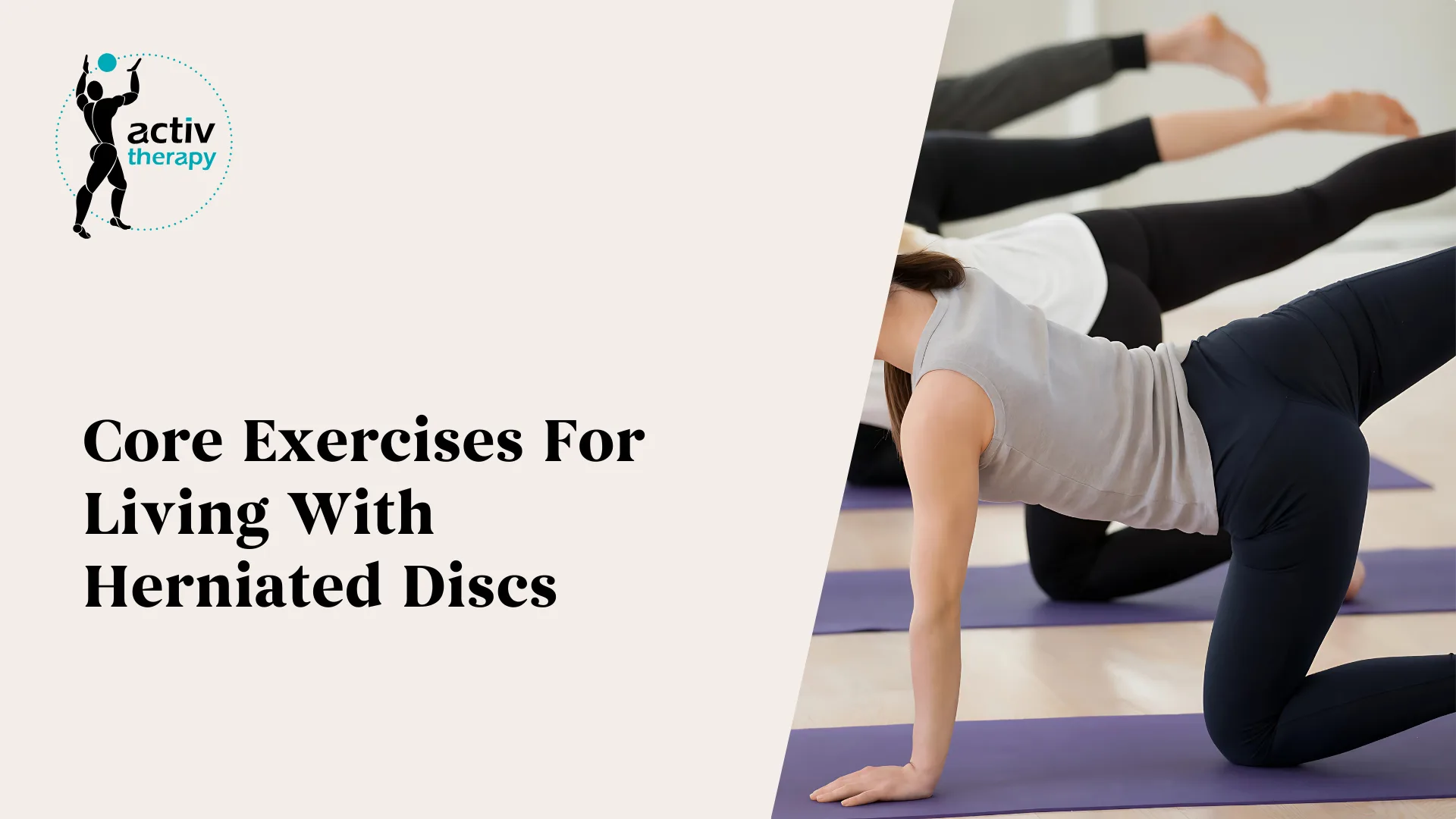
This foundational movement challenges your spinal stability while strengthening the muscles along your back and core simultaneously. On your hands and knees, extend one arm and the opposite leg while maintaining a completely still torso. The goal isn't speed or range of motion—it's keeping your spine absolutely stable throughout the movement.
Modified Planks
While full planks can be appropriate later in recovery, starting with wall planks or incline planks reduces the load on your spine. Focus on drawing your belly button toward your spine to engage your transverse abdominis, rather than simply holding yourself up with your shoulders and hip flexors. Hold for shorter durations with perfect form rather than longer holds with compensation patterns.
Transverse Abdominis Exercises for Disc Stability
Targeting your transverse abdominis specifically is crucial for herniated disc core workout routines. This muscle provides the foundation for all other core work and directly supports your injured area.
Abdominal bracing involves contracting your transverse abdominis without moving your spine. Place your hands on your lower abdomen and gently draw your belly button toward your spine—not by sucking in, but by tightening the deep muscle layer. You should feel tension under your fingers while still being able to breathe normally. Practice this activation lying down, then sitting, then standing before incorporating it into other movements.
Once you've mastered basic bracing, progress to maintaining that activation while performing gentle movements. Specific herniated disc exercises that incorporate this bracing technique help train your nervous system to automatically stabilise your spine during daily activities.
Hollow body holds, performed with a slightly modified position to protect your disc, are excellent for building transverse abdominis endurance. Rather than the traditional fully-extended position, keep your knees slightly bent and your lower back pressed gently into the floor. This eliminates the extension stress on your spine while still providing an intense core challenge.
Spinal Stability Exercises for Long-Term Recovery
Beyond isolated core work, full-body spinal stability exercises teach your nervous system to coordinate all your stabilising muscles during functional movements. These exercises prepare you for real-world activities without risking your recovery.
Anti-rotation presses challenge your core to resist twisting forces, which is essential for protecting your disc during daily activities. Using a resistance band attached to a fixed point, hold the band at chest level and press it straight out from your body. Your core works intensely to prevent rotation, building the exact stability you need for activities like reaching across your body or carrying uneven loads.
Pallof press variations can be performed standing, half-kneeling, or in a split stance, each progressively challenging your balance and core control. The beauty of these exercises is that they build tremendous strength without any spinal movement—perfect for disc herniation core training.
McGill's "Big Three" exercises—the curl-up, side plank, and bird dog—form a comprehensive program specifically designed for back health. Dr. Stuart McGill's research has shown these movements provide optimal core strengthening while minimising disc stress. When performed correctly with appropriate modifications, they're suitable even in the early stages of recovery.
Progression Guidelines and Safety Principles
Knowing when and how to progress your exercises is just as important as the exercises themselves. Moving too quickly can set back your recovery, while being too cautious may delay your return to normal activities.
Start with exercises that feel completely comfortable and pain-free. Any sharp pain, shooting sensations down your leg, or increased numbness means you need to stop immediately and potentially regress to an easier variation. Some mild muscle fatigue is normal, but nerve-related symptoms are not.
Master each exercise level before progressing. This means performing the movement with perfect form, no pain during or after, and no compensation patterns. Typically, you should be able to complete three sets of 10-15 repetitions (or 30-60 second holds) with ease before advancing to a harder variation.
Consider working with a qualified physiotherapist who understands disc injuries. They can assess your specific condition, identify movement compensations, and create a personalised progression plan. Lower back pain exercises should always be tailored to your individual presentation, as every herniated disc is unique in location and severity.
Common Mistakes to Avoid During Disc Recovery
Even with the best intentions, certain mistakes can compromise your recovery or lead to re-injury. Being aware of these pitfalls helps you avoid setbacks.
Holding your breath during exercises is one of the most common errors. Proper breathing maintains intra-abdominal pressure and prevents blood pressure spikes. Exhale during the exertion phase of each movement while maintaining your core brace. This takes practice but becomes natural over time.
Compensating with your hip flexors instead of engaging your deep core is another frequent issue. If you feel your hip flexors burning or cramping during core exercises, you're likely using them to compensate for weak or inactive deep abdominal muscles. This not only limits the effectiveness of the exercise but can also increase stress on your lumbar spine.
Progressing too quickly based on feeling "better" rather than actual healing is perhaps the most dangerous mistake. Disc healing takes time—typically 6-12 weeks for initial healing and up to 6 months for complete recovery. Just because your pain has decreased doesn't mean your disc has fully healed. Follow a systematic progression plan rather than jumping back into intense exercise too soon.
Integrating Core Work Into Daily Activities
The ultimate goal of your herniated disc core workout isn't just to get through your exercise session—it's to automatically stabilise your spine during everyday movements. This functional integration is what protects you long-term.
Practice your abdominal bracing before lifting anything, even light objects. This pre-activation prepares your spine for the load and becomes an automatic protective mechanism with consistent practice. When bending to pick something up, hinge at your hips while maintaining a neutral spine rather than rounding your back.
Apply the same stabilisation principles you use during exercise to activities like getting in and out of your car, reaching for items on shelves, or carrying groceries. Your core should activate before the movement begins, not as a reaction to feeling unstable.
Consider how different treatment approaches can support your recovery. Some patients find that combining core exercises with other modalities accelerates healing. Understanding the difference between chiropractic and physiotherapy approaches can help you make informed decisions about your comprehensive treatment plan.
Building a Sustainable Exercise Routine
Creating a consistent routine that fits your lifestyle increases your chances of long-term success. Your herniated disc core workout should be something you can maintain even after your symptoms resolve, as ongoing core strength prevents future injuries.
Start with just 10-15 minutes daily rather than attempting long sessions a few times per week. Frequency is more important than duration when building motor patterns and endurance in stabilising muscles. Morning sessions can be particularly beneficial as they activate your core before you begin daily activities.
Track your progress by recording which exercises you perform, the number of repetitions or hold times, and how you feel during and after. This data helps you identify patterns—such as certain movements that consistently cause discomfort—and shows you tangible progress over time, which is motivating during the sometimes slow recovery process.
Remember that setbacks are normal and don't mean you've failed. Factors like stress, poor sleep, or prolonged sitting can temporarily increase symptoms even when you're doing everything right with your exercises. Adjust your routine as needed rather than pushing through pain, and consult your healthcare provider if symptoms persist or worsen.
Recovery from a herniated disc requires patience, consistency, and the right approach to core strengthening. By focusing on safe ab exercises that protect your spine while building deep stabilisation, you create a foundation for long-term back health. The transverse abdominis exercises and spinal stability movements outlined in this guide provide a systematic path from acute injury to full functional recovery. With proper progression and attention to form, your core can become your spine's most effective protector rather than a source of further injury.
Ready to Get Help?
Book an appointment with one of our experienced Physiotherapy professionals across South West Sydney.
Book an AppointmentMedical Disclaimer
This article is intended for general informational and educational purposes only. It does not constitute medical advice and is not a substitute for professional diagnosis, treatment, or advice from a qualified healthcare provider. Always consult a registered physiotherapist, chiropractor, or other appropriate healthcare professional before starting any new treatment or exercise programme.