 (02) 9726 4491
How to Speed Up Herniated Disc Recovery: Core Exercises That Work

Clinically reviewed by Matthew Calabrese, Physiotherapist · Australian Health Practitioner Regulation Agency (AHPRA). This article is general information, not a substitute for an individual assessment.
A herniated disc can be a debilitating condition that profoundly affects daily activities, yet proper core strengthening remains essential for recovery. While many people fear exercising during rehabilitation, specific core movements can actually speed up healing and prevent future injuries when performed correctly. Understanding which exercises support spinal health—and how to execute them safely—marks the difference between prolonged discomfort and successful recovery. By focusing on targeted movements that promote stability without compromising the healing process, patients can gradually rebuild their core strength and confidence to return to normal activities.
Understanding Herniated Disc Mechanics
A herniated disc occurs through a distinct mechanical process that's essential to understand before beginning any exercise regimen. When the outer portion of a spinal disc weakens, it allows the inner, gel-like material to protrude or "bulge" beyond its normal boundaries. This condition, known as disc herniation, most commonly affects the lower back region, where the lumbar spine bears significant daily stress.
Understanding the mechanics of a herniated disc is crucial for developing effective core exercises that support recovery. The relationship between disc pressure and movement directly influences how exercises should be approached. When a disc herniates, it can compress nearby nerve roots, causing a range of symptoms including lower back pain, leg discomfort, numbness, and tingling sensations. These symptoms often intensify during prolonged sitting, which increases pressure on the affected disc.
The natural course of lumbar disc herniation typically shows improvement over time, with most patients experiencing significant pain reduction within three to six months. However, targeted core exercises can play a necessary role in supporting this recovery process. The key is recognising that while a herniated disc can cause considerable discomfort initially, proper exercise selection and progression can help manage symptoms and prevent further deterioration. Before starting any exercise program, it's essential to understand that the goal is to strengthen the core muscles surrounding the affected area while avoiding movements that might cause additional disc compression or nerve irritation. Working with experienced physiotherapy professionals who understand soft tissue manipulation techniques can help identify the root cause of disc herniation and develop an appropriate treatment strategy.
How to Speed Up Herniated Disc Recovery
Recovery from a herniated disc can be accelerated through strategic core strengthening combined with proper posture and movement patterns. The key is to begin rehabilitation early while respecting pain signals and avoiding movements that aggravate symptoms. Most patients who follow a structured exercise program see significant improvement within three to six months, though individual recovery timelines vary.
To optimise recovery speed, focus on reducing disc pressure through neutral spine positioning during daily activities. This means maintaining the natural curves of your spine when sitting, standing, and lifting. Avoid prolonged flexion-based activities like excessive bending or sitting in slouched positions, as these increase pressure on the anterior disc and may worsen herniation symptoms.
Core stabilisation exercises should begin as soon as tolerable, starting with gentle isometric holds that engage the deep abdominal muscles without movement. As tolerance improves, progress to dynamic exercises that challenge stability while maintaining spine neutral. The progression should be gradual, moving from floor-based exercises to functional movements that mimic daily activities. Those recovering from disc injuries often benefit from the same principles used in post-surgical recovery protocols, including controlled progression and careful monitoring of symptoms.
Supporting recovery also requires attention to lifestyle factors. Maintaining a healthy weight reduces spinal load, while staying active within pain tolerance prevents deconditioning. Anti-inflammatory nutrition, adequate hydration, and quality sleep all contribute to tissue healing. Combining these elements with targeted core exercises creates the optimal environment for accelerated herniated disc recovery.
Safe Core Training Methods
Safe core training for herniated disc recovery begins with exercises that maintain neutral spine alignment whilst building muscular endurance. The primary focus should be on isometric holds and controlled movements that engage the deep core stabilisers without creating excessive spinal loading or flexion-based stress on the affected disc.
Start with exercises performed in positions that minimise gravitational stress on the spine. Supine and quadruped positions are ideal for initial training, as they allow proper form whilst reducing compressive forces. The dead bug exercise, performed lying on your back, activates the transverse abdominis and multifidus muscles without requiring spinal movement. Similarly, quadruped arm and leg raises challenge core stability whilst maintaining a neutral spine position.
Wall planks and modified side planks offer excellent progression points, building strength through the oblique muscles and lateral stabilisers. These exercises should be held for shorter durations initially (10-15 seconds) with perfect form, rather than pushing for longer holds with compromised positioning. The key principle is quality over quantity—maintain neutral spine alignment throughout every repetition.
Breathing patterns matter significantly during core training. Avoid breath-holding, which increases intra-abdominal pressure excessively. Instead, practise diaphragmatic breathing whilst maintaining core engagement. This approach not only improves exercise effectiveness but also teaches proper breathing mechanics for daily activities. Proper breathing techniques during recovery can enhance overall rehabilitation outcomes and reduce pain levels.
By prioritising exercises that promote stability over mobility and focusing on maintaining neutral spine positions, individuals can effectively build core strength whilst supporting their recovery process. This approach not only aids in rehabilitation but also helps develop better movement patterns for long-term spinal health.
Progressive Exercise Techniques
Progressive training for herniated disc recovery requires a methodical approach that gradually increases exercise intensity and complexity over time. When dealing with disc herniation pain, it's paramount to begin with basic exercises that establish proper form and build foundational strength before advancing to more challenging movements.
Start with gentle core exercises in positions that minimise stress on the lumbar spine, such as lying supine with knees bent. Once patients can tolerate this position without discomfort, they can progress to exercises like modified bridges and controlled leg slides. As lower back pain decreases and stability improves, introduce more dynamic movements such as bird dogs and modified planks.
The next progression involves exercises that strengthen muscles through greater ranges of motion whilst maintaining spine neutral positioning. This might include standing exercises, wall slides, and carefully controlled rotation movements. Each advancement should only occur when the current level of exercise can be performed with proper form and without pain for multiple sessions. Similar progressive principles apply to balance training programs that help maintain overall stability and functional movement.
Key indicators for progression include reduced pain levels, improved movement control, and enhanced core stability. A typical progression might follow this sequence: isometric holds → dynamic stabilisation → functional movement patterns → sport-specific activities. It's indispensable to monitor symptoms during and after each progressive exercise session, adjusting intensity and complexity based on individual responses. If low back pain increases, return to the previous level until symptoms subside before attempting progression again.
Core Strengthening Exercises for Disc Bulge
Specific core strengthening exercises target the muscles that protect and stabilise the spine, directly addressing the underlying weakness that contributes to disc bulge. These exercises should focus on building endurance in the deep core muscles whilst avoiding positions that place excessive compressive or shear forces on the affected disc.
The pelvic tilt exercise serves as an excellent starting point, teaching patients how to control spine position through subtle core activation. Lying on your back with knees bent, gently flatten your lower back against the floor by engaging your abdominal muscles. Hold for 5-10 seconds, breathing normally, then relax. This fundamental movement establishes the foundation for more advanced exercises whilst providing immediate stability benefits.
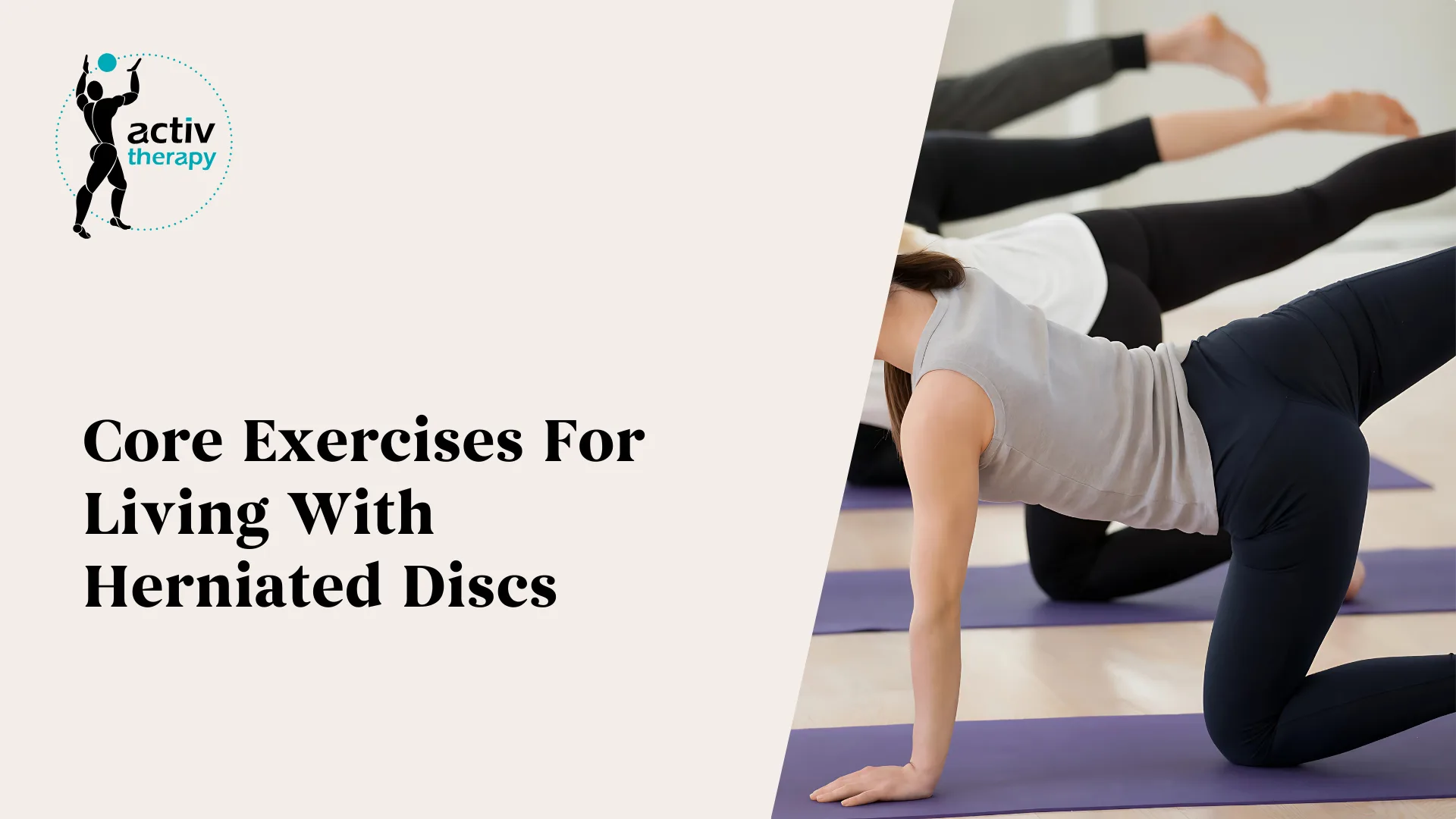
The bird dog exercise progresses core training by adding limb movement whilst maintaining spine stability. Begin on hands and knees in a neutral spine position. Slowly extend one arm forward and the opposite leg backward, maintaining a straight line from fingertips to toes. Hold for 5-10 seconds, then return to starting position and repeat on the opposite side. This exercise challenges rotational stability and builds the deep stabilisers essential for protecting bulging discs.
Modified planks complete the core strengthening triad by building anterior chain endurance. Start with wall planks or incline planks against a bench before progressing to floor-based versions. The key is maintaining perfect alignment from head to heels without allowing the hips to sag or pike upward. Begin with 10-15 second holds, gradually increasing duration as strength improves. These controlled movements help develop the muscular support necessary for long-term disc health and pain reduction.
Lower Back Pain Exercises for Long-Term Relief
Long-term relief from lower back pain requires a comprehensive approach that extends beyond core strengthening to include mobility work, hip stability, and functional movement patterns. The goal is to create a balanced musculoskeletal system that distributes loads evenly across the spine and surrounding structures.
Hip mobility exercises play a crucial role in reducing lower back strain. Tight hip flexors and limited hip extension can force the lumbar spine into excessive lordosis, increasing disc pressure. The supine hip flexor stretch, performed lying on your back with one leg hanging off a bed or bench whilst hugging the opposite knee to your chest, addresses this common limitation. Hold for 30-60 seconds per side, breathing deeply to encourage tissue release.
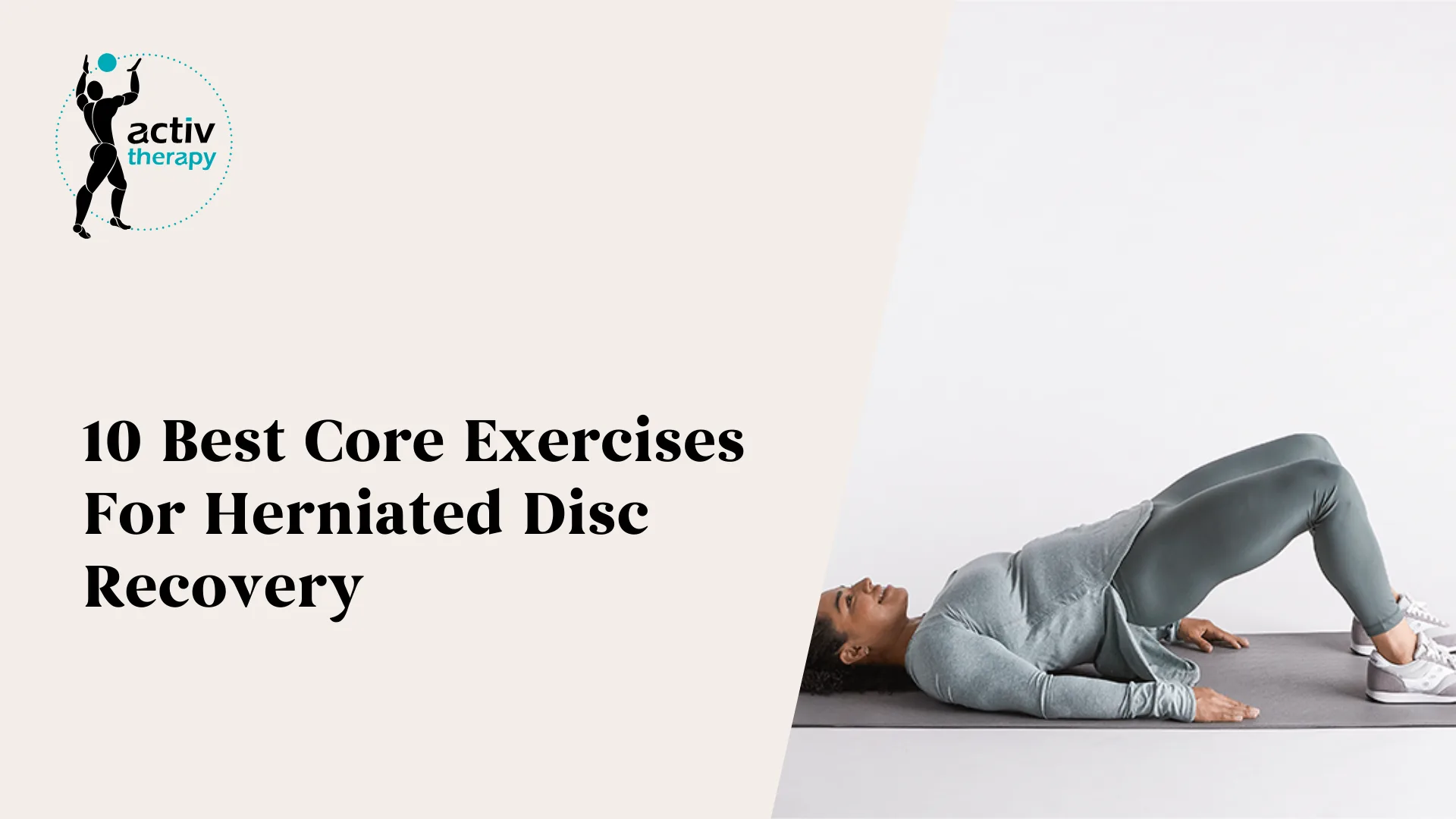
Glute strengthening exercises support the spine by improving hip extension power and reducing compensatory lumbar movement. The glute bridge, performed with feet flat and knees bent, activates the gluteus maximus whilst maintaining neutral spine alignment. Focus on squeezing the glutes at the top of the movement rather than arching the lower back. Progress to single-leg variations as strength improves, building the unilateral stability required for walking and daily activities. These exercises complement joint pain relief strategies that address multiple aspects of musculoskeletal health.
Functional movement training integrates core stability into real-world activities. Practise proper lifting mechanics using a hip hinge pattern rather than spinal flexion. Squat exercises with light resistance teach coordinated movement between hips, core, and spine. These practical applications ensure that rehabilitation gains transfer to daily life, reducing re-injury risk and supporting sustained lower back health. Consistency with these exercises, performed 3-4 times weekly, provides the foundation for lasting pain relief and improved function.
When to Seek Professional Guidance
Whilst self-directed exercise plays an important role in herniated disc recovery, certain situations require professional physiotherapy assessment and treatment. Recognising when to seek expert guidance can prevent complications and accelerate recovery outcomes through targeted intervention.
Immediate professional consultation is necessary if you experience progressive neurological symptoms such as increasing numbness, weakness in the legs, or difficulty controlling bladder or bowel function. These signs may indicate significant nerve compression requiring urgent medical attention. Similarly, if pain intensifies despite rest and conservative measures, or if symptoms don't improve after 4-6 weeks of self-management, professional assessment becomes essential.
A physiotherapist can provide individualised exercise prescription based on your specific presentation, ensuring exercises match your current functional capacity whilst progressing appropriately. They can identify movement compensations and muscle imbalances that may be contributing to ongoing symptoms. Manual therapy techniques, including soft tissue manipulation, can complement exercise therapy by addressing muscular tension and improving joint mobility.
Professional guidance is particularly valuable for those returning to sport, manual labour, or activities requiring high levels of spinal loading. A physiotherapist can implement sport-specific rehabilitation progressions and provide guidance on safe return-to-activity timelines. They can also educate on ergonomic modifications for work and home environments, reducing re-injury risk. Working with a qualified professional ensures your recovery program is comprehensive, evidence-based, and tailored to your individual goals and circumstances.
Conclusion
The implementation of targeted core exercises plays a vital role in herniated disc rehabilitation and accelerating recovery timelines. Through a combination of isometric stabilisation, dynamic movement patterns, and progressive strengthening techniques, patients can develop enhanced spinal stability and improved functional movement. When performed correctly and consistently, these evidence-based exercises contribute to pain reduction, increased mobility, and successful long-term recovery outcomes whilst minimising the risk of re-injury. Understanding how to speed up herniated disc recovery through safe exercise progression, proper disc mechanics, and professional guidance when needed creates the foundation for lasting spinal health and pain-free movement.
Ready to Get Help?
Book an appointment with one of our experienced Physiotherapy professionals across South West Sydney.
Book an AppointmentMedical Disclaimer
This article is intended for general informational and educational purposes only. It does not constitute medical advice and is not a substitute for professional diagnosis, treatment, or advice from a qualified healthcare provider. Always consult a registered physiotherapist, chiropractor, or other appropriate healthcare professional before starting any new treatment or exercise programme.