 (02) 9726 4491
Inner Ear Balance Exercises: 5 Techniques to Improve Stability

Clinically reviewed by Matthew Calabrese, Physiotherapist · Australian Health Practitioner Regulation Agency (AHPRA). This article is general information, not a substitute for an individual assessment.
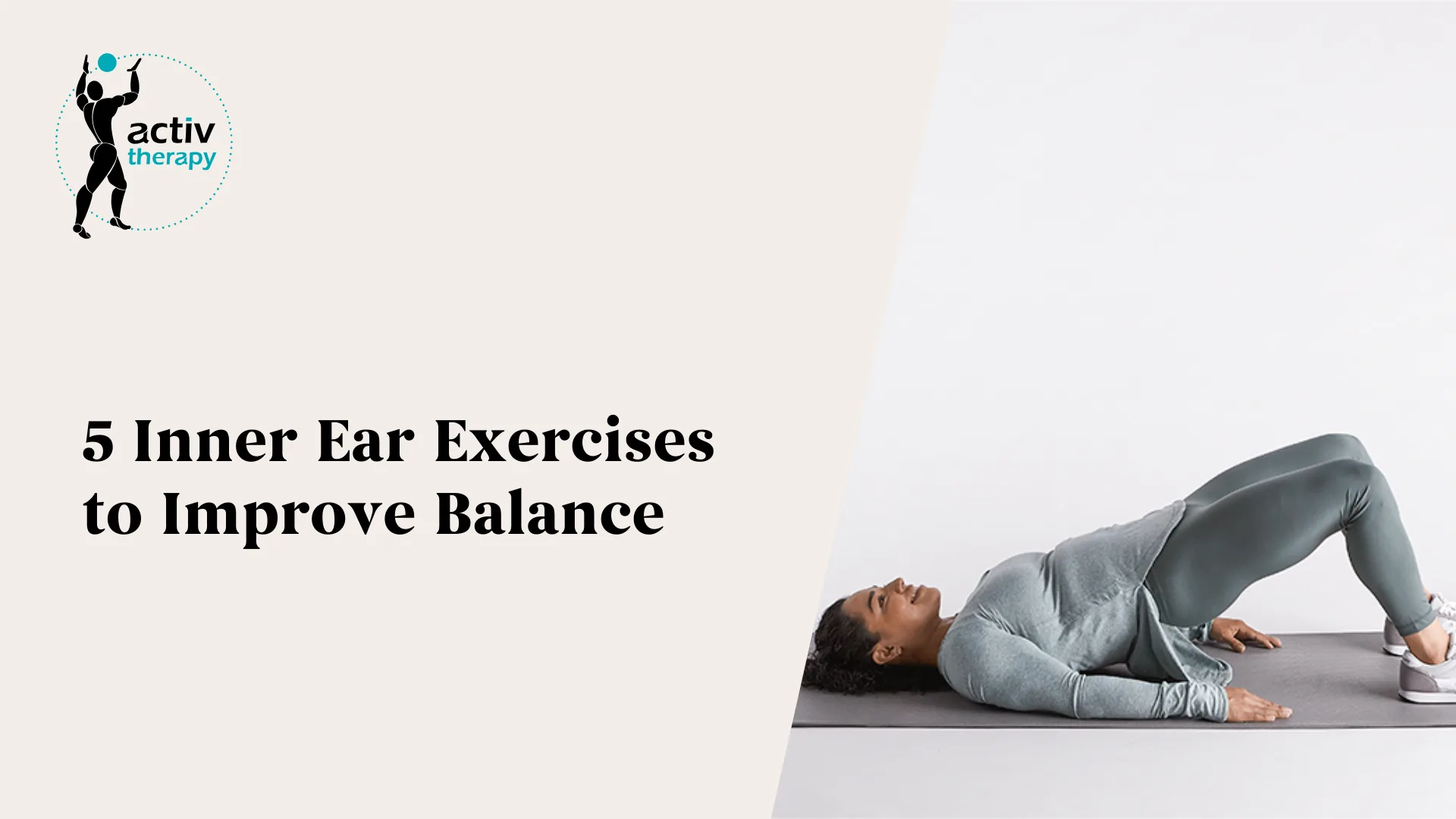
Balance disorders can greatly impact daily life, affecting everything from simple tasks to complex physical activities. While many factors contribute to balance control, the inner ear's vestibular system plays an indispensable role in maintaining stability and spatial orientation. Fortunately, specific exercises targeting this intricate system can help improve inner ear balance and reduce symptoms of dizziness or unsteadiness. Understanding and implementing these five essential inner ear balance exercises can make a considerable difference in vestibular function, potentially leading to enhanced confidence and better overall mobility.
Understanding Inner Ear Balance and Vestibular Function
The inner ear contains the vestibular system, a sophisticated network of fluid-filled canals and sensory organs that detect head position and movement. When this system becomes compromised through injury, infection, or age-related changes, you may experience dizziness, vertigo, or balance difficulties. The good news is that targeted vestibular rehabilitation exercises can help retrain your brain to process balance signals more effectively, improving your stability and reducing uncomfortable symptoms.
Vestibular exercises work by stimulating the inner ear through controlled movements, helping your nervous system adapt and compensate for any dysfunction. This process, known as vestibular adaptation, allows your brain to recalibrate how it interprets signals from the inner ear, eyes, and body position sensors. Just as balance training can prevent falls, these specific inner ear exercises can strengthen your vestibular system naturally and improve your overall stability.
Head and Neck Movement Exercises
The Cawthorne-Cooksey exercises form the foundation of vestibular rehabilitation, using systematic head and neck movements to retrain your inner ear balance system. These exercises are designed to be performed while sitting in a comfortable, stable position, making them accessible for most people regardless of their current balance abilities.
Begin by sitting in a sturdy chair with your feet flat on the floor. Start with controlled head movements, moving your head forward and back 20 times at a slow, deliberate pace. Follow this by turning your head from right to left 20 times. Include shoulder shrugging exercises to complement these movements and reduce tension in your neck muscles.
When first starting these exercises, maintain a slow pace and gradually increase speed as your comfort level improves. This progression helps your brain adapt to the sensations and reduces potential dizziness. For enhanced effectiveness, practice these exercises with your eyes closed, which helps the brain better process vestibular signals without relying on visual input.
Additionally, incorporate wall-focused exercises by fixing your gaze on a specific point while moving your head up and down or side to side. This technique strengthens the connection between your visual and vestibular systems. As you progress, advance to performing these exercises while standing and walking, always ensuring safety and stability. These movements should be precise and controlled, allowing your brain to adapt to maintaining balance during daily activities. Similar to how soft tissue manipulation addresses muscular dysfunction, these exercises target vestibular dysfunction to restore normal function.
Gaze Stabilisation Training
Gaze stabilisation training represents a fundamental technique for improving inner ear balance by focusing on maintaining clear vision during head movements. These specialised vestibular exercises help retrain the visual-vestibular system to process movement more effectively, ultimately enhancing balance and reducing symptoms of dizziness.
The primary technique involves keeping your eyes focused on a fixed target while performing controlled head motions. Begin by selecting a stationary object at eye level, such as a letter on the wall or a picture. Maintain your gaze on this target while turning your head horizontally from side to side at a moderate pace. Perform this exercise for 30-60 seconds, taking breaks if you experience dizziness.
As your tolerance improves, progress to include vertical head movements (up and down) and diagonal movements while maintaining visual focus. These movements may initially provoke mild dizziness, but with consistent practice, your brain adapts and symptoms typically diminish. This adaptation process is similar to how the body adjusts during other rehabilitation programmes.
Advanced gaze stabilisation exercises incorporate dynamic elements, such as maintaining visual focus while walking or performing daily activities. Practice with eyes open initially, then challenge yourself by closing your eyes briefly to rely more heavily on vestibular input. You can also try focusing on a moving target, such as a ball being tossed from hand to hand, while keeping your head still or moving.
For optimal results, perform gaze stabilisation exercises regularly and systematically. Start with 2-3 sessions daily, each lasting 1-2 minutes, and gradually increase duration as your symptoms improve. The exercises help strengthen the connection between visual inputs and vestibular signals, allowing your brain to better interpret and respond to head motion, leading to improved balance control and reduced visual disturbances during everyday activities.
Standing Balance Position Series
Standing balance exercises progressively challenge your vestibular system through controlled positions that increase in difficulty. These exercises are designed to stimulate the semicircular canals in your inner ear through movements that gradually increase in complexity, helping you maintain stability during everyday situations.
The sequence begins in a basic standing position with feet shoulder-width apart, emphasising even weight distribution and core engagement. Stand near a wall or sturdy surface for safety, but avoid holding on unless necessary. This initial stance establishes proper postural alignment and builds a solid foundation for more challenging movements. Hold this position for 30 seconds, focusing on maintaining steady, relaxed breathing.
As stability improves, progress to single-leg stands, alternating between right and left legs for 30-second intervals. Keep your standing knee slightly bent and lift the opposite foot just a few centimetres off the ground. Your arms can be held out to the sides for additional balance or placed on your hips as you gain confidence.
Next, incorporate head movements while maintaining the one-leg stance. Turn your head slowly from left to right and right to left, moving about 45 degrees in each direction. This progression specifically targets the semicircular canals, which are essential for maintaining equilibrium during dynamic movements. Just as fall prevention programmes incorporate progressive balance challenges, these exercises systematically build your vestibular strength.
The challenge intensifies when you perform these exercises with eyes closed, forcing greater reliance on the vestibular system and proprioceptive feedback from your muscles and joints. Start with just 10 seconds of eyes-closed standing and gradually increase duration. The final progression introduces arm movements and reaching exercises while maintaining the one-leg stance, creating a comprehensive balance training routine that mimics real-world activities and prepares you for various daily movement challenges.
Walking and Movement Patterns
Dynamic walking exercises represent a crucial progression in vestibular rehabilitation, combining controlled movements with purposeful directional changes to strengthen inner ear balance. These exercises challenge your vestibular system in functional, real-world contexts, improving your ability to maintain stability during everyday activities.
To make these exercises effective, start by practicing head movements while walking. Walk in a straight line down a hallway or across a room, turning your head slowly from side to side at a comfortable pace. Keep your eyes focused on specific points during these movements to enhance vestibular adaptation and reduce dizziness. Perform this exercise for 1-2 minutes, gradually increasing duration as you become more comfortable.
Incorporate gaze stabilisation techniques by holding a small object, such as a rubber ball or business card with a letter on it, at arm's length. Pass it from hand to hand while walking, keeping your eyes focused on the object. This exercise challenges your visual tracking abilities and strengthens the connection between your visual and vestibular systems. As you move the object back and forth, maintain awareness of your surroundings and walking path to ensure safety.
Progress to more advanced movement patterns that include directional changes. Practice walking in figure-eight patterns, walking backwards for short distances, or navigating around strategically placed obstacles. These variations force your vestibular system to adapt to changing conditions and improve your overall balance control. Start with wider patterns and larger obstacles, gradually decreasing space and increasing complexity.
Enhance the effectiveness of your walking exercises by adding cognitive tasks, such as counting backwards by threes or naming items in a category. This dual-tasking approach helps your brain process multiple inputs simultaneously, improving overall balance control during distracting situations. Remember to maintain proper posture throughout these exercises and stop if you experience severe dizziness. The key is to challenge your balance system while staying within your comfort zone, gradually pushing the boundaries as your vestibular function improves.
Dynamic Balance Coordination Activities
Coordinated movement activities serve as essential building blocks for comprehensive vestibular rehabilitation and improved inner ear balance. These dynamic exercises challenge the vestibular system by integrating multiple sensory inputs, including visual, somatosensory, and motor responses, to maintain balance during complex movements.
A complete programme typically begins with basic coordination exercises. Stand with feet shoulder-width apart and practice moving your head to the right while simultaneously raising your right hand above eye level and placing your left hand on your hip. Hold for 5 seconds, then reverse the movement. This exercise trains your brain to coordinate multiple body parts while maintaining balance. Repeat 10 times on each side.
Progress to more challenging activities that involve weight shifting and reaching. Stand with feet apart and practice controlled side-to-side weight transfers while reaching for objects at different heights and distances. To enhance visual coordination, focus on a letter posted on a wall while executing these movements, training your eyes to move independently of head position. This separation of eye and head movement is crucial for maintaining balance during daily activities.
Advanced coordination activities incorporate tandem walking exercises and agility drills. Walk heel-to-toe in a straight line, then add head turns at each step. Practice quick direction changes, such as walking forward for five steps, then pivoting to walk backward. These exercises are specifically designed to improve adaptation to sudden changes in direction and speed, helping you maintain equilibrium during unexpected situations.
Include activities that challenge your reaction time and balance simultaneously. Catch and throw a ball while standing on one leg, or practice stepping over obstacles of varying heights while turning your head. These multi-component exercises prepare your vestibular system for the unpredictable demands of real-world environments. Through consistent practice of these dynamic balance coordination activities, you can expect improved functional mobility, increased confidence in performing routine tasks, reduced fall risk, and enhanced overall vestibular function and stability.
How to Strengthen Your Inner Ear Balance Naturally
Beyond structured exercises, several lifestyle approaches can help strengthen your inner ear balance naturally. Staying well-hydrated supports the fluid balance in your inner ear canals, which is essential for optimal vestibular function. Aim for adequate water intake throughout the day, as dehydration can worsen balance symptoms and dizziness.
Managing stress levels also plays a crucial role in vestibular health. Chronic stress can exacerbate balance problems and increase muscle tension that interferes with proper posture and movement. Incorporate relaxation techniques such as breathing exercises to reduce stress and improve overall well-being.
Nutrition matters for inner ear health as well. Limiting sodium intake can help reduce fluid retention that may affect the inner ear. Some people find that reducing caffeine and alcohol consumption also helps minimise dizziness and balance disturbances. A diet rich in vitamins B12 and D, magnesium, and omega-3 fatty acids supports nerve function and may contribute to better vestibular health.
Getting adequate sleep is essential for vestibular recovery and adaptation. Your brain processes and consolidates the neural changes from your balance exercises during sleep, making rest a critical component of any inner ear balance improvement programme. Aim for 7-9 hours of quality sleep each night to support optimal vestibular function.
When to Seek Professional Help for Inner Ear Balance Treatment
While these inner ear balance exercises can be highly effective, certain situations warrant professional evaluation and treatment. If you experience sudden, severe vertigo, persistent dizziness lasting more than a few days, or balance problems accompanied by hearing loss, seek medical attention promptly. These symptoms may indicate conditions requiring specific medical intervention.
A vestibular rehabilitation specialist or physiotherapist can assess your individual balance challenges and create a customised exercise programme tailored to your specific needs. They can identify which components of your vestibular system need the most attention and progress your exercises appropriately. Professional guidance ensures you're performing exercises correctly and safely, maximising benefits while minimising risks.
Physiotherapists experienced in vestibular rehabilitation can also help diagnose specific inner ear conditions, such as benign paroxysmal positional vertigo (BPPV), which may require specialised repositioning manoeuvres rather than general balance exercises. They monitor your progress, adjust treatment intensity, and help you navigate any setbacks or challenges during your recovery journey.
If you're not seeing improvement after several weeks of consistent home exercise, or if your symptoms worsen despite regular practice, professional evaluation can identify underlying issues that may need different treatment approaches. Working with experienced practitioners who understand the complexities of vestibular function, similar to those who provide joint mobility treatment, ensures you receive comprehensive care addressing all aspects of your balance difficulties.
Conclusion
Inner ear balance exercises represent a crucial therapeutic approach for vestibular rehabilitation and improved stability. Through systematic implementation of Cawthorne-Cooksey exercises, gaze stabilisation training, standing balance progressions, walking patterns, and dynamic coordination activities, you can achieve significant improvements in vestibular function and balance control.
Regular practice of these targeted exercises contributes to enhanced postural control, reduced fall risk, and better overall balance performance in daily activities. Start slowly, progress gradually, and remember that consistency is key to strengthening your inner ear balance naturally. Whether you're recovering from a vestibular disorder or simply seeking to improve your balance as a preventive measure, these five techniques provide a comprehensive foundation for better stability and confidence in movement.
Ready to Get Help?
Book an appointment with one of our experienced Physiotherapy professionals across South West Sydney.
Book an AppointmentMedical Disclaimer
This article is intended for general informational and educational purposes only. It does not constitute medical advice and is not a substitute for professional diagnosis, treatment, or advice from a qualified healthcare provider. Always consult a registered physiotherapist, chiropractor, or other appropriate healthcare professional before starting any new treatment or exercise programme.